Redefine your kitchen experience
Our handmade sinks are created by experienced craftsmen, and each piece is a unique work of art.

Summary: Scratches on stainless steel sinks are almost unavoidable, but with the right daily habits and maintenance methods, you can greatly reduce them. This article shares 7 practical prevention tips, DIY repair methods for light scratches, and explains how JSD’s satin polish process improves scratch resistance from the start.
Stainless steel sinks are attractive and durable, but their surface is actually much softer than it looks. In daily use, direct contact between knives, pots, cookware, and tableware and the sink surface can leave scratches. Even more noteworthy, food residue and dust can act as abrasives during wiping, scratching the sink surface during cleaning.
Scratches not only affect appearance but also make the sink more likely to trap dirt. The good news is that by developing a few simple daily habits, you can keep scratches to a minimum.
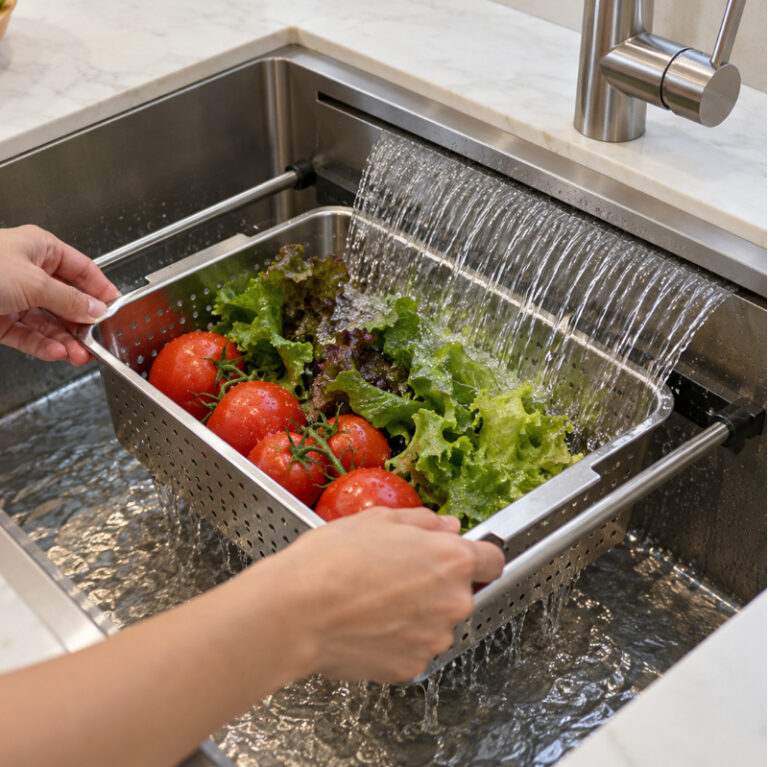
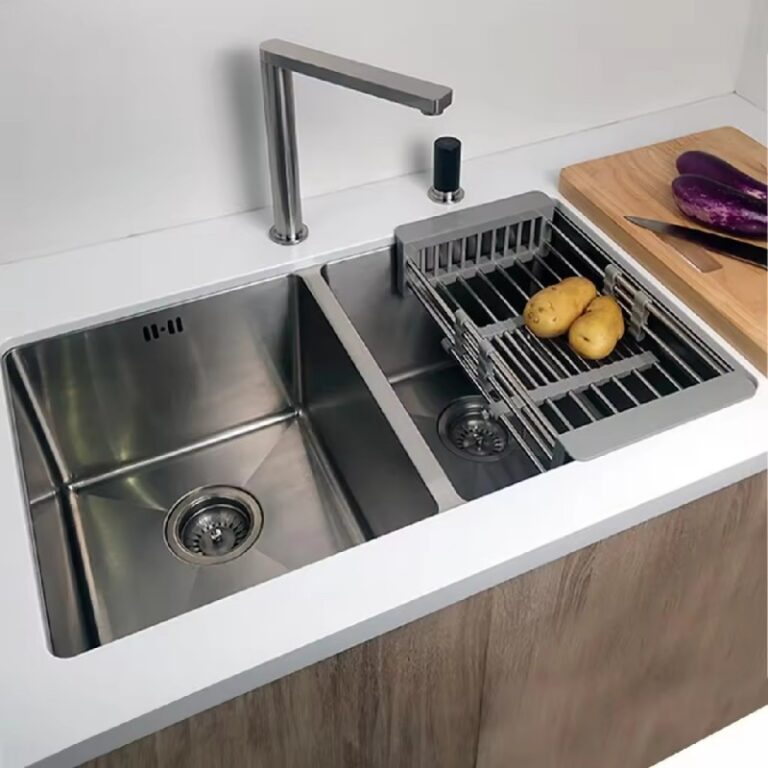
Placing a custom-fit protective grid at the bottom of the sink is the most direct and effective anti-scratch measure. The raised design of the grid keeps pots and tableware from directly touching the sink bottom, while allowing water to pass through without affecting drainage. Choose a stainless steel grid with rubber feet—it stays in place and won’t scratch the sink itself.
Set up a cutting board over the sink. When chopping and preparing food, both ingredients and knives stay on the board, completely avoiding contact with the sink surface. Many modern workstation sinks come with a matching cutting board that slides freely on the sink rails, protecting the sink while adding counter space.
This is the easiest mistake to make and the most damaging. The abrasive material in steel wool will leave dense, fine scratches directly on the sink surface. Worse, iron particles shed from the steel wool can embed in the sink surface and produce rust spots when exposed to water. When cleaning a stainless steel sink, use a nylon brush, soft sponge, or microfiber cloth with a mild, non-abrasive cleaner.
The surface of a stainless steel sink has a visible brushed grain. When cleaning, always wipe along the grain, not across it or in circles. Cleaning against the grain not only tends to leave water marks but also increases the chance of micro-scratches. Develop this habit, and your sink’s luster will last much longer.
Water spots and mineral deposits (hard water stains) are not scratches themselves, but they make the sink surface rougher. Later cleaning then requires more friction, indirectly increasing the risk of scratches. After each use, wipe the sink dry with a soft cloth to effectively prevent mineral buildup.
Salt, vinegar, lemon juice, and similar substances in prolonged contact with a stainless steel surface can damage its passive protective layer, making the surface more susceptible to corrosion and scratches. Clean up food residue in the sink as soon as possible after cooking—don’t let it sit overnight.
Regular use of a stainless steel polish can fill in tiny surface scratches and form a protective film on the sink surface. Avoid chlorine bleach or strong acidic cleaners, as they can cause irreversible damage to the stainless steel surface.
If your sink already has light scratches, don’t worry too much. Most shallow scratches can be faded or removed with the following methods:
Baking Soda Paste Method: Mix 3 tablespoons of baking soda with 1 tablespoon of water into a paste. Dip a microfiber cloth into it and gently wipe the scratched area along the grain. Don’t press too hard—several gentle passes are much safer than one aggressive scrub.
Specialty Cleaner with a Non-Scratch Scouring Pad: Use a specialty stainless steel cleaner such as Bar Keepers Friend with a white 3M Scotch-Brite non-scratch scouring pad. Wipe gently along the grain to effectively fade light scratches.
Judging Scratch Depth: Run your fingernail across the scratch. If your nail catches on it, the scratch is relatively deep and cannot be completely removed—only faded as much as possible. For deep scratches, it’s best to have a professional handle it; blind DIY attempts may only make the surrounding area worse.
Beyond daily maintenance, the surface treatment process of the sink itself has a decisive impact on scratch resistance. JSD uses a satin polish process on its stainless steel sink surfaces, a process that strikes a good balance between practicality and appearance.
A satin polished surface is made up of a uniform, fine brushed texture. Compared with a mirror polish, it can more effectively hide the fine scratches produced in daily use—scratches blend into the texture instead of standing out as they would on a mirror surface. At the same time, the surface structure of satin-treated stainless steel is more uniform and dense, making it easier to clean.
JSD’s sinks use high-quality SUS304 stainless steel combined with a satin polish process, demonstrating excellent scratch and stain resistance in daily kitchen use. In addition, JSD offers a honeycomb embossed surface option, which uses surface microstructure to further reduce the direct contact area between cookware and the flat surface, providing extra physical protection against scratches.
Choosing a sink with solid surface craftsmanship, combined with correct usage and maintenance habits, will allow your stainless steel sink to maintain its like-new appearance for a long time.
The core principles for preventing scratches on a stainless steel sink are actually very simple: reduce contact with hard objects, choose the right cleaning tools, and develop a wiping habit. A protective grid and cutting board are the first line of defense; avoiding steel wool and cleaning along the grain are daily basics; and choosing a product like JSD that has been carefully crafted in terms of surface process is a wise choice for fundamentally extending the service life of your sink.