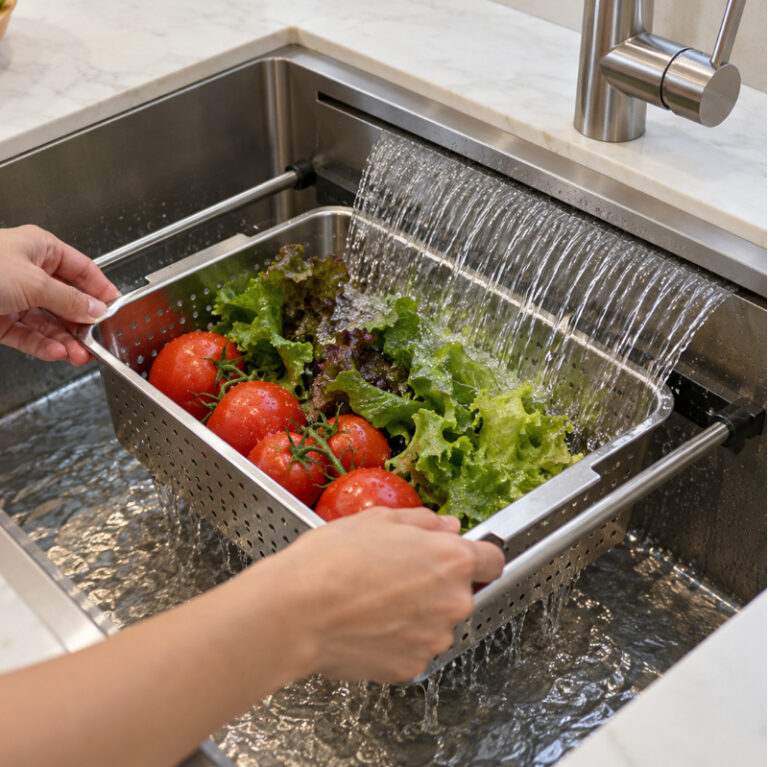
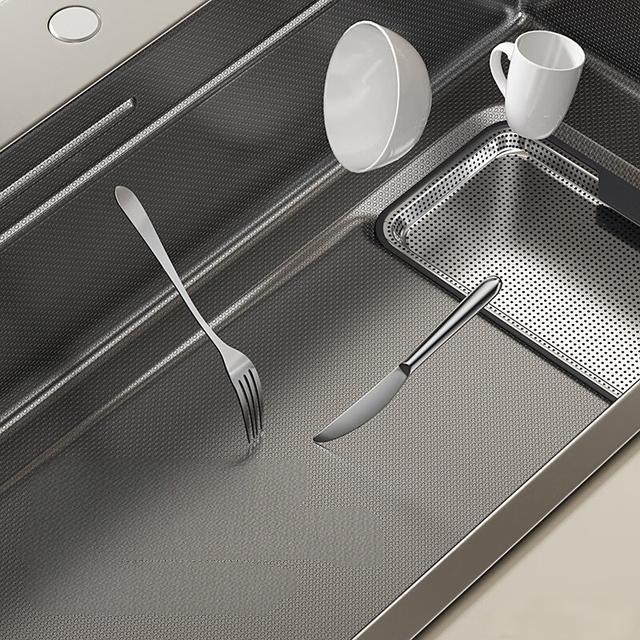
Redefine your kitchen experience
Our handmade sinks are created by experienced craftsmen, and each piece is a unique work of art.

Yes—undermount sinks are a good idea when the countertop is compatible, the mounting system provides suitable support, and the installation allows future maintenance. They offer an uninterrupted countertop edge and make it easier to sweep crumbs and water into the bowl. However, they also demand more coordination between the sink supplier, countertop fabricator, and installer than a typical drop-in sink.
For distributors, private-label buyers, and residential project teams, that coordination affects more than appearance. An unsuitable cutout, missing support hardware, or inaccessible fixing can turn an attractive sink into an expensive service call. The right question is therefore whether the complete installation will work reliably within the project’s budget. This guide explains what to check before approving a model, comparing quotations, or placing a repeat order.
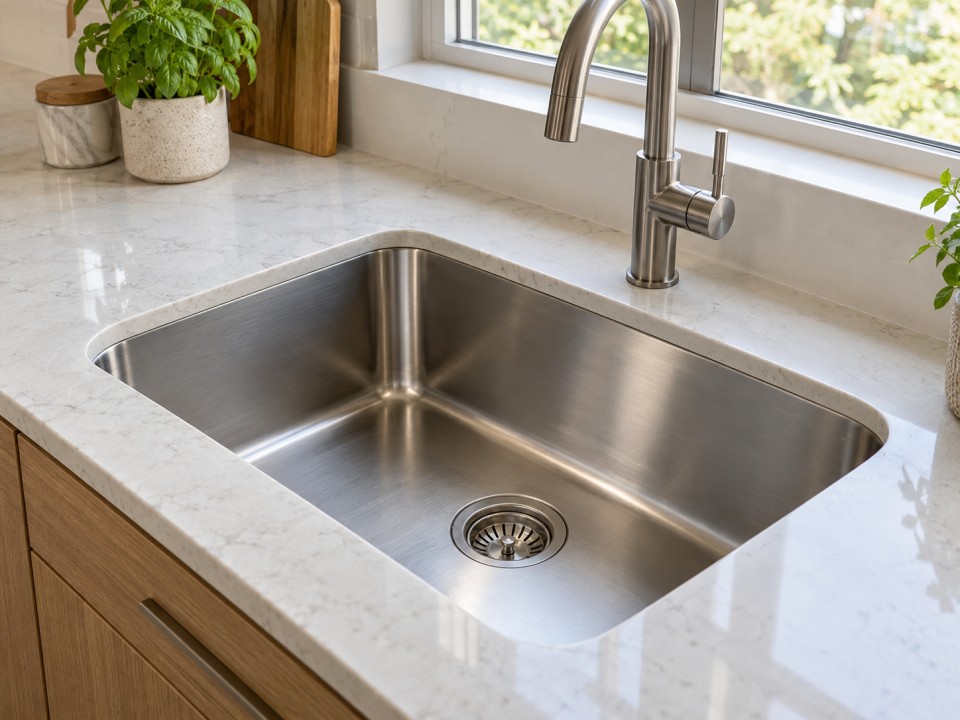
An undermount sink attaches beneath the countertop opening. The countertop’s cut edge remains visible, while the sink’s mounting flange sits underneath it.
A drop-in sink works differently: its rim rests on top of the countertop and covers the opening’s edge. A flush-mount sink generally sits in a prepared recess so that its rim aligns with the surrounding countertop surface.
These distinctions matter when ordering. “Flush mount” and “zero-reveal undermount” describe different installation details, even though both can produce a visually clean junction.
A product name alone is insufficient to confirm compatibility. Buyers should obtain an installation drawing showing the mounting flange, countertop opening, fixing method, and permitted installation types.
Browsing an undermount kitchen sink range can help establish the preferred bowl configuration and finish. The next step is to match the shortlisted sink to the actual countertop and cabinet construction.
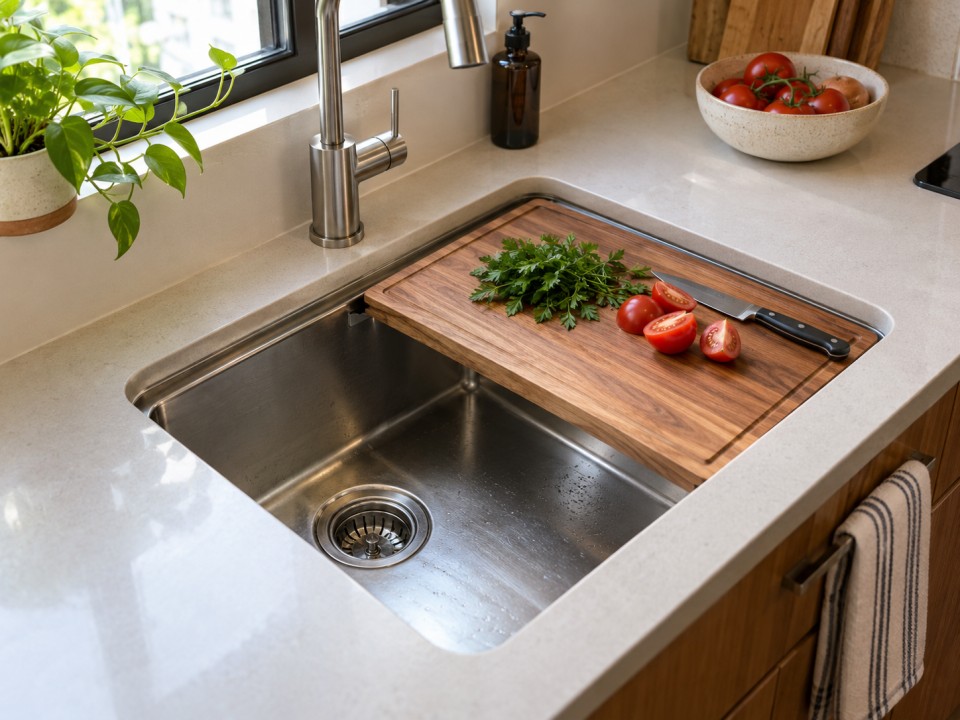
Undermount sinks are particularly useful in new kitchens where the countertop, cabinet, and sink can be specified together. Their value becomes less certain when an existing opening, limited installation access, or unsuitable countertop restricts the design.
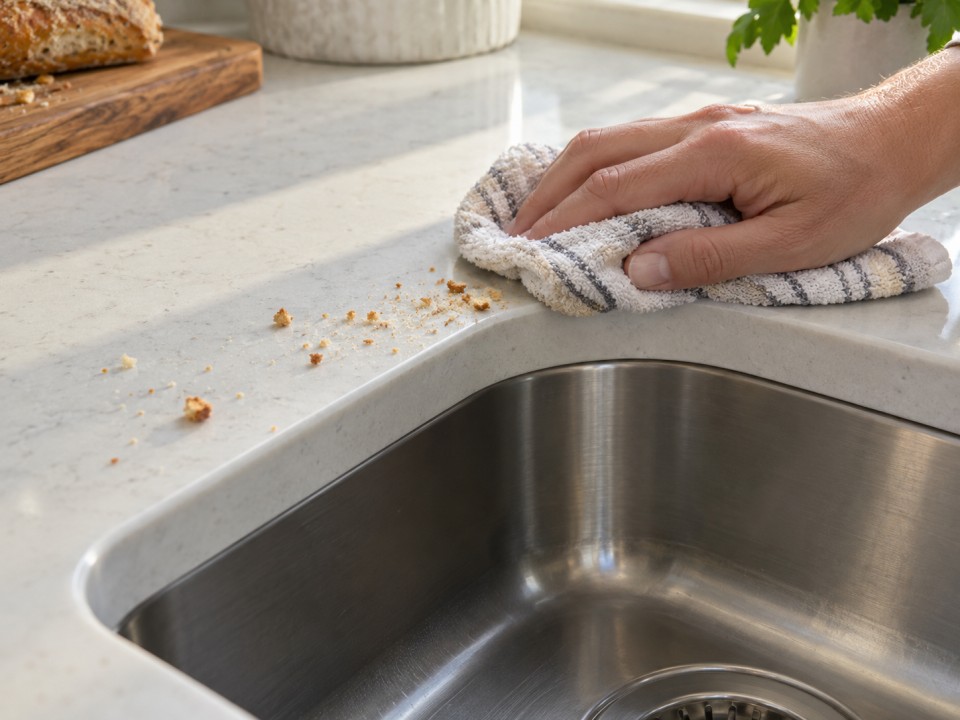
Without a raised sink rim, users can wipe countertop debris directly into the bowl. This is a practical benefit in preparation areas where crumbs and splashes accumulate.
The benefit applies to the countertop surface. The sink-to-countertop joint still needs cleaning, and its accessibility depends partly on the chosen reveal.
For apartment developments or coordinated kitchen collections, undermount installation can help create a consistent visual detail.
That consistency requires more than ordering the same sink model. Buyers should also standardize the countertop opening, reveal, edge finish, and installation instructions. Otherwise, identical sinks can look noticeably different after installation.
A compact single bowl may preserve space for preparation while accommodating larger cookware than a similarly sized divided sink. Check usable internal dimensions against the intended tasks.
For example, the compact single-bowl undermount sink provides a starting point for small-kitchen selection. Its external dimensions should not be treated as the minimum cabinet requirement; the mounting hardware and surrounding clearances must also fit.
A drop-in sink may be the more practical choice when the project uses conventional laminate countertops, requires straightforward replacement, or cannot provide reliable access beneath the worktop.
Flush mounting may suit a design that calls for a visible rim level with the countertop, provided the sink and countertop manufacturer approve the required recess.
The 810 mm dual-basin flush-mount sink is relevant when comparing that alternative. Confirm its approved mounting detail before treating it as interchangeable with an undermount model.
| Buying criterion | Undermount sink | Drop-in sink | Flush-mount sink |
|---|---|---|---|
| Countertop junction | Bowl sits beneath an exposed, finished cut edge | Rim covers the cut edge | Rim sits within a prepared recess |
| Surface cleanup | No raised rim obstructing wiping | Raised rim needs cleaning around it | Level junction, with a perimeter joint to clean |
| Fabrication requirements | Accurate opening, finished edge, approved support | Opening must fit the bowl and supporting rim | Accurate recess depth and opening geometry |
| Conventional laminate projects | Requires a specifically approved system | Often the simpler option | Requires approval for the complete construction |
| Replacement planning | Opening and underside access constrain alternatives | Rim can cover some opening variation | Replacement must match the recess |
| Best procurement fit | Coordinated new kitchens | Budget renovations and straightforward replacements | Projects with controlled fabrication details |
Countertop compatibility depends on the exact material, thickness, opening geometry, and installation system. “Suitable for stone countertops” is too broad to serve as a complete specification.
These materials are commonly considered for undermount installation because the opening can have a finished exposed edge. However, the fabricator must still approve the cutout and support arrangement.
A large opening can leave narrow sections of countertop in front of or behind the sink. Nearby joints, faucet holes, and cabinet supports also affect the design.
For a specific example, Cosentino’s Dekton countertop design and installation guide calls for cabinet-anchored support bars beneath large sinks exceeding 600 mm or particularly heavy sinks. This is guidance for that countertop system, rather than a universal threshold for every material.
The purchasing implication is straightforward: obtain approval for the actual countertop configuration before releasing the sink order.
Conventional laminate over a moisture-sensitive substrate should not automatically receive a standard undermount installation. The exposed opening and its moisture protection require particular attention.
However, saying that undermount sinks can never work with laminate is also inaccurate. Purpose-designed systems exist. Karran’s Edge E-550 product information identifies compatibility with laminate and solid-surface countertops through its specialized installation design. That compatibility should not be transferred to an unrelated sink.
Ask for written confirmation covering the sink model, countertop construction, adhesive system, fabrication process, and warranty conditions.
Treat these as project-specific applications. Request a documented detail addressing the exposed edge, sealing, support, and maintenance requirements.
If the supplier and fabricator cannot agree on an approved installation, selecting a different mounting style is more sensible than relying on a general assurance.
A thicker stainless steel bowl cannot compensate for an unsuitable mounting arrangement. Sink thickness and installation support answer different questions.
Thickness is one element of the product specification. Support determines how the installed assembly carries the sink and its intended service loads.
The defensible buying approach is to approve the complete assembly before paying extra for a thicker specification.
The installation needs both an approved load-support arrangement and a watertight junction.
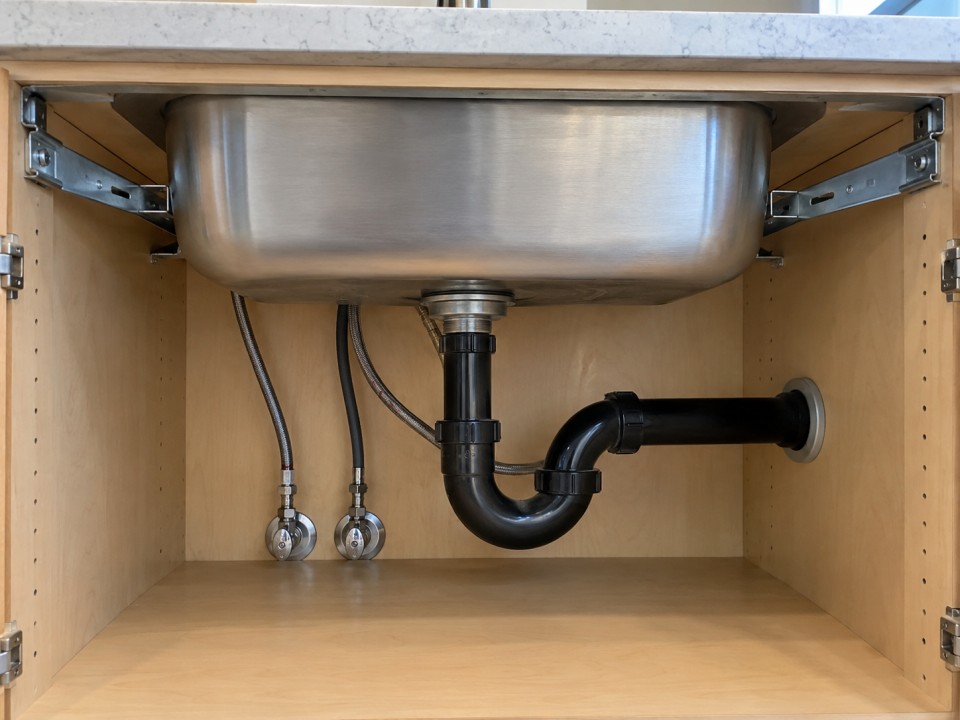
Depending on the product, support may involve clips, brackets, rails, or a cabinet frame. Use the sink and countertop manufacturers’ instructions to select the arrangement.
For example, KOHLER’s undermount installation instructions, document 1644835-2, specify a cabinet frame supporting the entire sink rim, along with silicone sealing. The instructions also require a clean mounting area and curing according to the sealant manufacturer’s directions. Those details apply to the products covered by that document.
Do not accept “silicone included” as a complete answer to a question about structural support.
In a Reddit countertop discussion about a dropped undermount sink, the poster described finding no backup strap or bracket after the sink detached. The account is an unverified individual experience, not evidence of an industry failure rate. It nevertheless illustrates why support details deserve inspection before handover.
For project procurement, define who supplies the support, who installs it, and who signs off the completed assembly. Photographing the mounting arrangement before the cabinet becomes crowded can also help future servicing.
When reviewing a double-bowl undermount sink with selectable thickness, ask which parts of the sink the stated thickness describes.
Request thickness in millimetres, its agreed tolerance, and the measurement locations. Confirm whether the flange and bowl share the same construction.
An assessment should also include flange flatness, weld quality where applicable, drainage, finish consistency, and the proposed mounting system. A single thickness number cannot describe overall product quality.
Some expensive specification mistakes concern geometry rather than material.
The reveal is the relationship between the countertop opening and the sink bowl edge.
BLANCO’s mounting guidance distinguishes partial or positive reveal, zero reveal, and negative reveal. Positive reveal leaves some sink rim visible; zero reveal aligns the countertop edge with the bowl; negative reveal lets the countertop overhang the bowl.
Each option changes the appearance and access to the junction. A negative reveal can hide the rim, but buyers should inspect whether the underside of the overhang is comfortable to clean.
Specify the reveal on the approved drawing. “Install neatly” leaves too much room for interpretation.
A deep bowl may suit cookware, but its installed position also affects reach and under-sink space.
Review the bowl, drain fitting, trap, waste disposer if specified, support components, and storage system together. Cabinet width alone does not confirm that the installation fits.
For repeated projects, a physical mock-up can reveal conflicts that separate product drawings miss.
An internal ledge can support a cutting board, colander, or drying rack. However, the countertop opening must leave the accessory usable in the selected installation.
A compact workstation kitchen sink can be considered where preparation space is limited. Ask for an assembled sample showing the intended reveal and included accessories. Check that accessories seat securely and can be removed without striking the countertop.
For a compact black stainless steel undermount sink, “black” describes appearance without fully identifying the finish process.
Request the finish specification, approved color sample, cleaning instructions, and agreed acceptance criteria. Examine visible scratches, color variation, and compatibility with drain fittings.
Do not assume that every dark finish has the same maintenance requirements or that a general sink warranty covers all cosmetic wear.
Undermount sinks remove the raised countertop rim, but they do not eliminate joints or maintenance.
Users should be able to clean the junction and inspect it for separation, leakage, or discoloration. Follow the specified cleaning instructions for both the sink finish and countertop.
For managed properties, include those instructions in the handover documents. A finish that performs well under approved care may still be unsuitable if routine maintenance uses incompatible chemicals or abrasive tools.
Support components should be positioned so that maintenance remains practical. Check whether a technician can reach the drain, fixing points, and seal without dismantling unrelated equipment.
Replacement also deserves attention. A new sink must suit the existing opening, flange space, cabinet, and support arrangement. Similar external dimensions do not guarantee a match.
For private-label collections, retain approved drawings and template revisions. Discuss replacement availability with the supplier before discontinuing a model used across a large project.
Compare undermount sink quotations on installed scope, rather than unit price alone.
A useful project estimate includes:
These items will vary by project and market. A universal installation price would be misleading without defined labor rates, countertop construction, and scope.
When comparing suppliers, separate exclusions clearly. One quotation may include mounting hardware and individual protective packaging, while another covers only the sink body.
Packaging deserves particular attention because the mounting flange is a functional surface. Ask the supplier how the carton protects it and how accessories are restrained during transport.
For recurring orders, consider carton dimensions, mixed-model handling, spare-part identification, and the process for reporting damage. A small saving at purchase can disappear if receiving inspection and replacement coordination become more difficult.
An accurate RFQ should describe the installation as well as the sink.
| RFQ field | Information to provide or request | Why it matters |
|---|---|---|
| Application | Residential project, retail collection, compact kitchen, or other intended use | Establishes functional and service expectations |
| Mounting type | Undermount, drop-in, or flush mount; approved alternatives | Prevents assumptions based on product names |
| Dimensions | Overall size, usable bowl size, depth, and tolerances | Supports layout and production checks |
| Cabinet envelope | Internal clearances and obstructions | Confirms installation access and fit |
| Countertop | Exact material, thickness, and fabrication approval | Establishes mounting compatibility |
| Opening and reveal | Approved template, corner geometry, and revision | Controls appearance and fit |
| Material and finish | Stainless grade, thickness locations, finish specification, approved sample | Makes quotations comparable |
| Support system | Required components, supplier scope, installation detail | Defines how the assembly is supported |
| Plumbing | Drain interface and compatibility with selected fittings or disposer | Reduces connection conflicts |
| Accessories | Included items, dimensions, and fit requirements | Controls completeness and usability |
| QC requirements | Inspection criteria and agreed functional checks | Sets an objective acceptance basis |
| Commercial terms | Quantity by model, MOQ, lead time, destination, freight basis, warranty, packaging | Establishes cost and delivery scope |
For a new supplier or model, approve a production-representative sample before authorizing countertop fabrication.
Useful acceptance checks include dimensions, flange flatness, visible surface condition, drainage behavior under agreed conditions, accessory fit, and the completeness of hardware and documentation. Define the method and acceptance criteria with the supplier; “good quality” is not an inspection standard.
Finally, assign responsibility for the interfaces. The sink supplier, fabricator, cabinet maker, and installer should work from the same approved drawing. An undermount sink is a sensible purchase when those details are resolved before production and installation.

Undermount sinks offer easier countertop wiping and an exposed countertop edge. Drop-in sinks may suit conventional laminate, simpler renovations, and replacement-focused projects. Choose according to countertop compatibility, fabrication capability, maintenance access, and installed cost.
Some purpose-designed systems support undermount installation in laminate. A standard undermount sink should not be assumed compatible. Obtain written approval for the exact sink, countertop substrate, fabrication method, adhesive system, and moisture-protection detail.
They need the support arrangement approved for the sink and countertop. That may involve brackets, clips, rails, or a cabinet frame. Verify the required system in the installation instructions rather than assuming sealing material alone provides sufficient support.
An undermount installation does not inevitably develop mold. The concealed junction still needs cleaning and inspection, particularly if moisture or residue remains there. Persistent discoloration, gaps, or leakage should prompt an assessment of the joint and surrounding materials.
No. Zero reveal describes alignment between the countertop opening and an undermounted bowl. Flush mounting generally places the sink rim in a prepared recess level with the countertop. Confirm the construction through a sectional installation drawing.
Sometimes, provided the replacement fits the existing opening and can be installed through available access. Bowl shape, corner geometry, flange dimensions, and fixing positions all matter. Verify compatibility before removing the original sink.
No. Thickness is one specification among several. Evaluate the stated measurement locations alongside material grade, flange flatness, drainage, finish, fabrication quality, and installation support. Select thickness according to the application and approved sample.