Redefine your kitchen experience
Our handmade sinks are created by experienced craftsmen, and each piece is a unique work of art.

Most people only realize how important a kitchen sink is after living with a bad one for a while.
At first, the problems seem small.
Water ends up around the countertop every time dishes are washed. Bigger cookware has to be angled awkwardly just to fit inside the bowl. The faucet never quite reaches the corners properly. None of these things feel dramatic on their own, but after a few months, the kitchen starts feeling slightly irritating to use.
And that matters more than people think.
The sink area is easily one of the most used parts of the kitchen. It handles everything — rinsing vegetables, filling pots, washing dishes, draining pasta, cleaning cutting boards, even temporary storage when cooking gets chaotic. In some homes, it probably gets used more than the stovetop itself.
A good sink setup rarely gets noticed. A bad one gets noticed constantly.
That’s why experienced kitchen designers usually pay far more attention to sink planning than homeowners expect. It’s not really about choosing a “nice-looking sink.” It’s about reducing friction in everyday life.
Oddly enough, the most expensive option is not always the best one either.
Some people genuinely need a deep workstation sink with accessories everywhere. Others are happier with a simple single bowl and a reliable pull-down faucet. The better choice usually comes down to cooking habits, available space, and how the kitchen actually behaves during a normal week.
Not how it looks in staged showroom photos.
A surprisingly common mistake is choosing a sink before thinking about how the kitchen is actually used.
People often shop visually first. That usually creates problems later.
A sink may look stunning in a minimalist catalog but become frustrating in a busy family kitchen where cookware piles up every evening. Likewise, oversized commercial-style setups sometimes look impressive online while feeling completely unnecessary in smaller homes.
Before comparing materials or configurations, it helps to step back and think about routine instead.
Questions like these matter more than most trend articles suggest:
The answers usually narrow the decision down very quickly.
Good kitchens tend to feel effortless because movement inside them makes sense. There’s a natural flow between preparation, cooking, washing, and storage. When the sink supports that flow properly, people notice it immediately — although most cannot explain exactly why the kitchen feels easier to use.
They just feel less interrupted while working.
Despite all the newer materials entering the market, stainless steel still owns the majority of modern kitchens.
Partly because it’s practical. Partly because it ages predictably.
It works almost anywhere without fighting the design around it. Modern kitchens, industrial spaces, apartments, transitional interiors — stainless steel rarely looks completely out of place.
That flexibility matters.
Of course, quality varies quite a bit.
Cheaper stainless steel sinks tend to show scratches, dents, or discoloration earlier than many buyers expect. That’s one reason manufacturers continue pushing 304 stainless steel so heavily. It holds up better long term and deals with moisture more reliably.
There’s also something psychological happening with stainless steel.
People associate it with cleanliness almost automatically. Professional kitchens use it everywhere, so visually it signals hygiene, efficiency, and durability even before someone touches it.
Still, stainless steel is not perfect.
Water spots show up easily in certain lighting. Lower-end models can sound hollow and noisy while washing dishes. Some homeowners also dislike the colder visual feel compared with stone-based materials.
That’s partly why modern premium sinks now include soundproofing pads and anti-condensation coatings underneath. Those details sound minor in product descriptions, but in daily life they make the kitchen noticeably quieter and more comfortable.
Quartz composite sinks became popular for a reason that has less to do with performance and more to do with atmosphere.
They soften the kitchen visually.
Stainless steel reflects light and feels functional. Quartz absorbs light and feels calmer.
That difference changes the mood of a kitchen more than people usually expect before seeing it installed.
In Scandinavian interiors especially, quartz sinks blend into countertops and cabinetry much more naturally. Instead of becoming a metallic focal point, the sink almost disappears into the overall design language of the room.
Some homeowners love that. Others find it too subtle.
Another thing people notice immediately is the sound difference. Quartz naturally absorbs noise better during washing, which matters a lot in open-concept homes where kitchen sounds travel into living spaces.
It also tends to hide water marks more effectively than polished steel.
Still, quartz is not automatically superior.
Online buying guides often push materials as though there is a universal winner, but kitchens do not work that way. A busy household with heavy cookware may prefer stainless steel durability, while a design-focused homeowner may care more about warmth, texture, and visual softness.
Neither choice is objectively wrong.
Single bowl sinks became extremely popular over the last few years, especially in modern minimalist kitchens.
The reason is fairly obvious once people start using them.
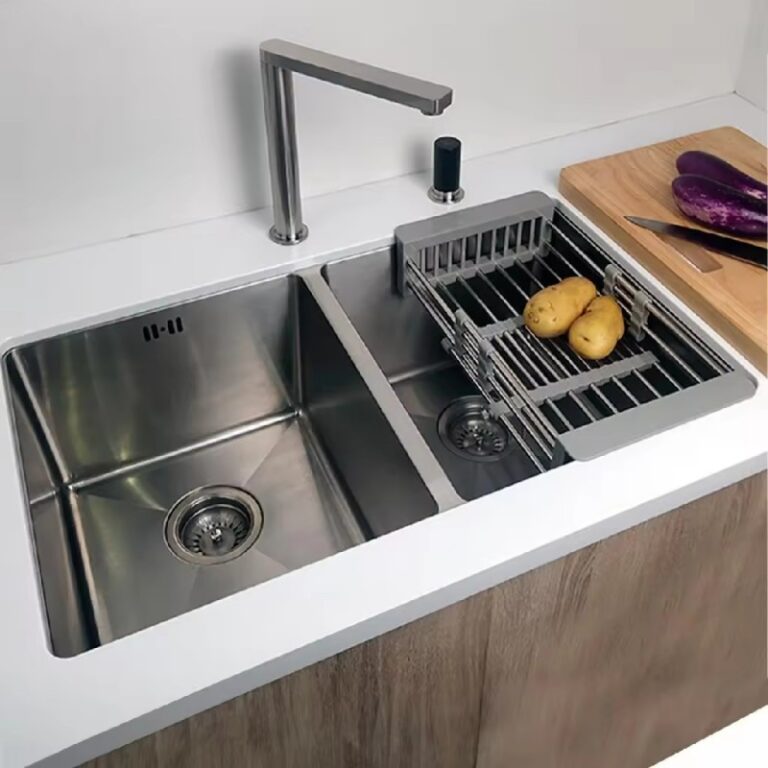
Large pots fit more comfortably. Baking trays slide in without awkward angles. Cleaning feels less restricted because there’s one uninterrupted workspace instead of two divided sections.
Visually, they also make countertops feel cleaner and less crowded.
But double bowl sinks never disappeared for a reason.
Some people genuinely prefer separating tasks while cooking. One side stays filled with dirty cookware while the other remains usable for rinsing vegetables or washing dishes. In larger households, that separation can make the kitchen feel more organized during busy hours.
Others barely use the second bowl at all.
That’s why this decision usually comes down to behavior more than aesthetics.
A lot of homeowners accidentally design kitchens around internet trends instead of around their own routines. It looks good initially, but six months later the practical frustrations start showing up.