Redefine your kitchen experience
Our handmade sinks are created by experienced craftsmen, and each piece is a unique work of art.

Buying stainless steel sinks wholesale looks simple on paper. Gauge, size, price, MOQ—done.
But anyone who’s been in this business for more than one sourcing cycle knows the truth:
Most sink problems don’t show up on the spec sheet. They show up six months later—after installs, returns, angry contractors, and warranty emails you didn’t budget time for.
This guide is written for buyers who want fewer headaches, stronger margins, and products they don’t have to defend. Not the cheapest sink. The right sink—for your business model. For brands sourcing directly from manufacturers like JSD Sinks, these decisions shape long-term profitability.
One of the biggest wholesale mistakes is choosing sinks based only on what factories offer fastest or cheapest.
Instead, ask first:
A stainless steel sink for a DIY retail customer needs different priorities than one for a developer project, kitchen brand, or commercial distributor—especially when selecting between formats like undermount sinks or top-mount alternatives.
If you skip this step, everything that follows is guesswork.
Most competitors stop at:
“304 is better than 201.”
That’s true—but incomplete.
Two sinks can both be “304 stainless steel” and perform very differently after one year of real use, especially across high-volume categories like workstation sinks.
Ask factories for:
A cheaper steel that causes returns costs more than premium steel that doesn’t.
Everyone advertises 16 gauge or 18 gauge.
Few talk about how that steel is formed.
What actually affects sink performance:
Some “16-gauge” sinks dent easier than well-made 18-gauge sinks because the steel was over-stretched during forming—something especially noticeable in compact designs like single-bowl undermount sinks.
Pro tip for wholesalers: Ask for a cross-section photo of the corner radius. That’s where cost-cutting hides.
End users don’t complain about gauge. They complain about noise.
A sink that sounds like a drum at 10pm becomes:
Real noise control is not:
It is:
If your supplier treats noise reduction as an afterthought, customers will too—and not kindly.
These details rarely show up in price lists, but they define product perception:
Centered drains look symmetrical. Rear drains improve cabinet storage and plumbing clearance.
Which does your customer value more?
Undermount sinks with poorly finished edges cause:
These are not “small” issues at scale.
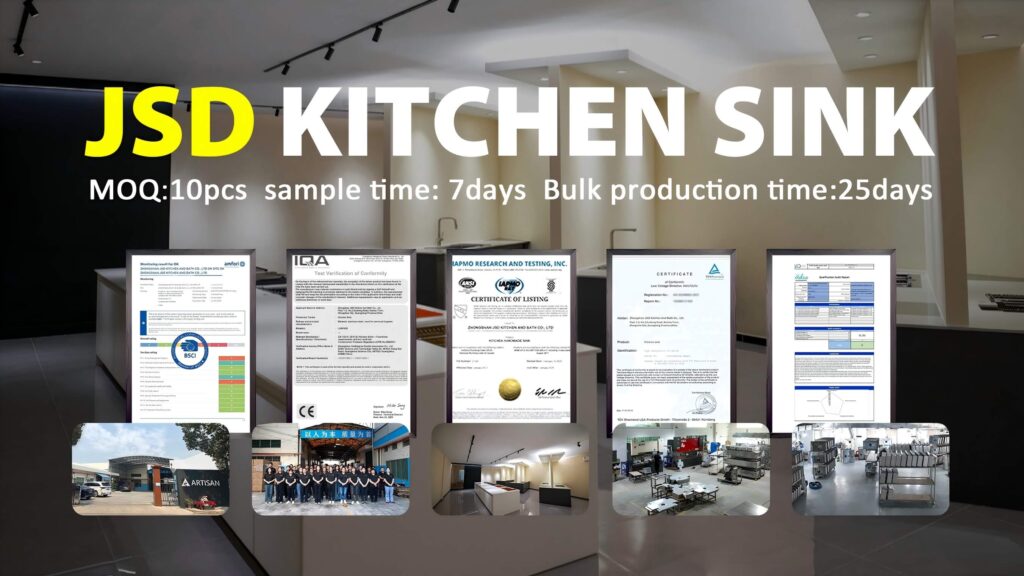
Not all certificates add value. Some are just marketing noise.
Focus on what actually protects your business:
Ask yourself:
Will this certificate help me sell—or protect me legally?
If the answer is no, it’s decoration.
Factories love saying “we support OEM.”
What they don’t say:
Customization only makes sense when:
If you’re testing a market, choose a strong standard model first. Customization should amplify success—not gamble on it—something experienced OEM buyers understand when working with suppliers offering OEM & ODM services.
Broken sinks don’t come from bad steel. They come from bad packaging.
For wholesale, packaging should:
Cheap packaging turns good sinks into refund problems.
Here’s the uncomfortable truth:
A good sink from a bad supplier becomes a bad product.
Look beyond price:
Ask questions they can’t prepare scripts for.
You’re on the right track if:
That’s the difference between moving boxes and building a business.
The best wholesale stainless steel sinks aren’t the cheapest. They’re the ones that:
Choose with your future customer complaints in mind, not just your current cost spreadsheet.
Because in wholesale, what you save upfront often shows up later—somewhere you can’t deduct.