Redefine your kitchen experience
Our handmade sinks are created by experienced craftsmen, and each piece is a unique work of art.

Most people don’t research stainless steel sinks because they’re curious.
They research them because something already annoyed them.
A rust-colored ring near the drain.
A loud, echoing bang every time water hits the bowl.
A sink that looked great at install and somehow feels “tired” a year later.
That’s when the question shows up:
What type of stainless steel sink is actually good?
Not “premium.”
Not “commercial grade.”
Just… good.
For many homeowners, that question eventually leads them to browse real-world examples on sites like JSD Sinks, trying to understand what actually lasts beyond the showroom shine.
If stainless steel were simple, there wouldn’t be so many bad sinks.
“Stainless steel” is a category, not a promise. It covers materials that behave very differently once you put them in a kitchen where people cook fast, clean late, and don’t wipe things dry every time.
Some steel forgives that.
Some steel remembers it.
This is especially noticeable when comparing everyday kitchen setups versus more carefully designed workstation sinks built for regular, heavy use.
If you’ve read other articles, you’ve seen the list:
304, 316, 201.
They explain the percentages. They show neat tables. And technically, they’re not wrong.
But those articles never answer the part people actually care about:
Why does one sink feel solid and calm, and another one feels cheap even though it claims the same grade?
Because steel grade is only one part of the story — and honestly, not the part you interact with most.
304 stainless steel is not exciting. That’s its strength.
It doesn’t need special care.
It doesn’t panic if water sits overnight.
It doesn’t react when you rinse tomato sauce or lemon juice down the drain.
That’s why so many kitchens end up with 304 sinks without the owners even knowing it. Nothing goes wrong, so nobody asks questions — especially with well-built options like a durable 304 stainless steel sink.
If stainless steel had a personality, 304 would be the one that quietly does the work and doesn’t complain.
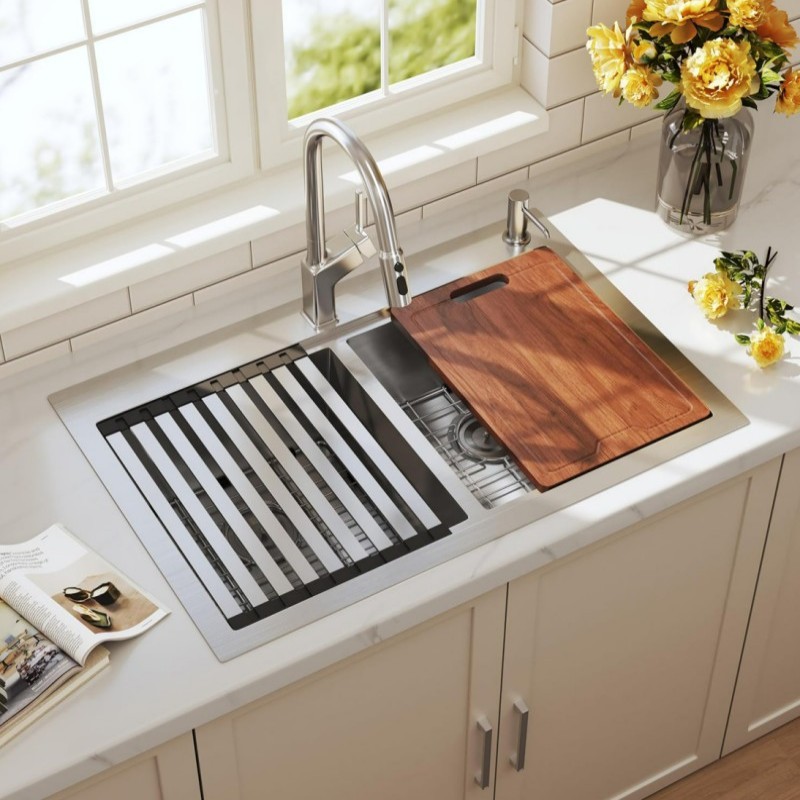
This is where people get confused — and where sellers stay quiet.
Two sinks can both be 304 and still feel completely different to use.
One feels firm.
The other flexes when you lean on it.
That difference has almost nothing to do with chemistry.
It’s about how much steel is actually there and how it was shaped.
Thin steel rings. Thick steel absorbs sound.
Poor forming creates tension. Good forming releases it.
You don’t see that on a spec sheet.
You feel it the first time you turn on the tap — especially with deeper designs like an undermount sink where structure matters more.
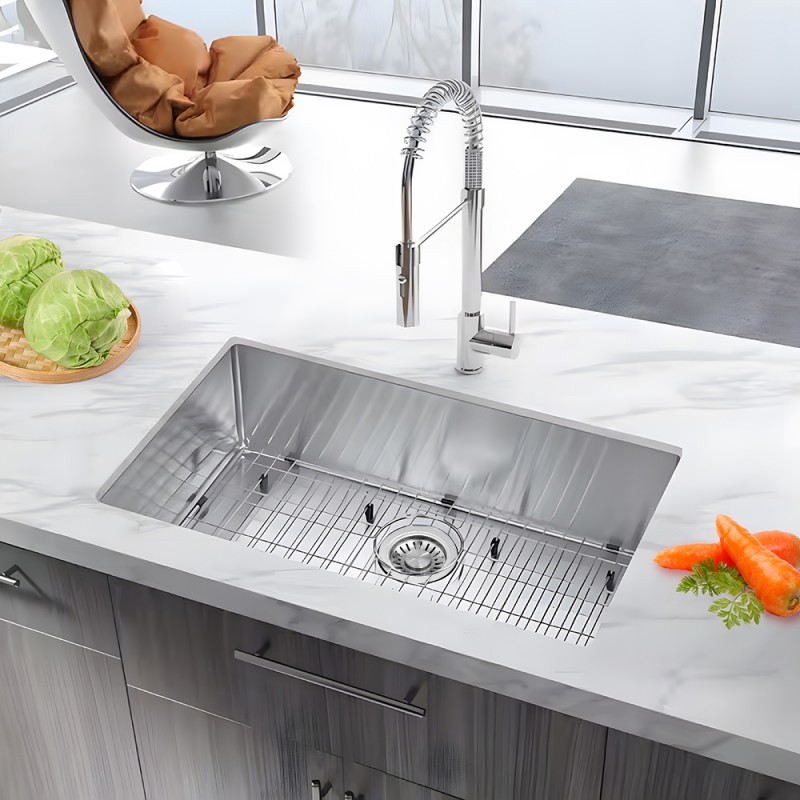
316 stainless steel gets talked about like it’s the “upgrade.”
And yes, it resists corrosion better — especially salt.
But here’s the part people don’t say out loud:
Most home kitchens don’t fail because of corrosion.
They fail because of:
316 doesn’t magically fix those things.
So unless your kitchen lives in salty air or harsh chemicals, 316 often solves a problem you don’t actually have.
201 stainless steel is the reason some people think all stainless sinks are overrated.
At the beginning, it looks okay.
Smooth. Shiny. Clean.
Then time passes.
A spot that doesn’t wipe away.
A dull area near the drain.
Something that looks like rust but isn’t quite rust — yet.
201 doesn’t like being ignored. And kitchens ignore things by default.
That’s why people don’t hate 201 sinks immediately. They slowly lose trust in them, especially when comparing them to better-finished single bowl undermount sinks.
Look underneath.
Look at:
That’s where shortcuts show up first — including in accessories like poorly made drain parts, compared to a well-designed sink drain strainer.
A good sink ages evenly.
A bad sink ages in patches.
Once you notice that, you can’t unsee it.
For normal kitchens, normal cooking, and normal human behavior:
304 stainless steel, with:
That combination lasts longer than:
Not because it’s perfect — but because it’s tolerant.
The best sink is the one you stop thinking about.
No weird noises.
No stains that won’t leave.
No feeling that you need to be careful around it.
It just becomes part of the kitchen.
And that’s usually a well-made 304 stainless steel sink — not because it’s impressive, but because it doesn’t demand attention.
If a sink needs a lot of explaining to justify itself, it probably isn’t that good.
The best stainless steel sink doesn’t sell itself loudly.
It just stays where you put it — doing its job — long after the marketing words fade.