Redefine your kitchen experience
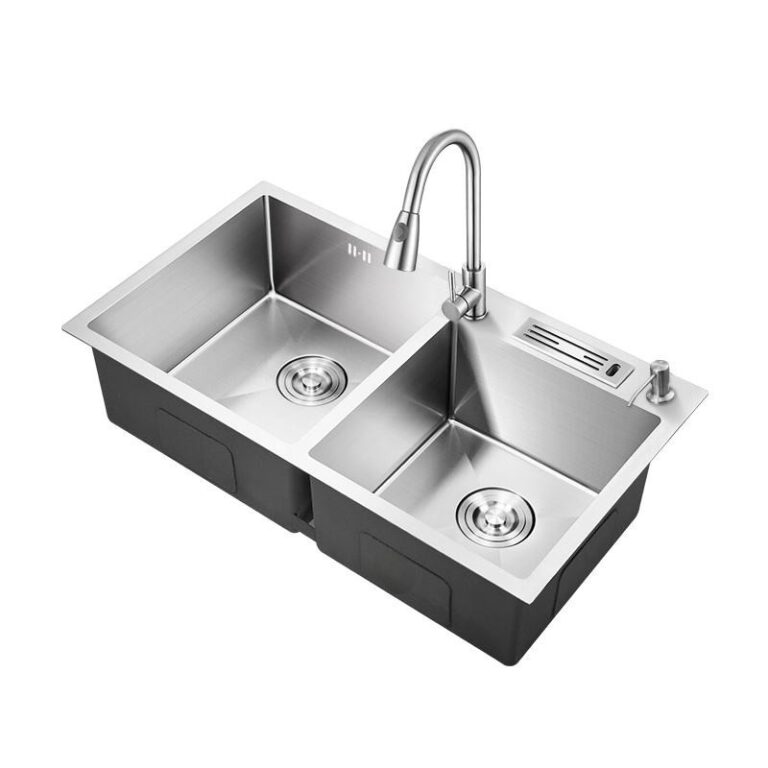
Our handmade sinks are created by experienced craftsmen, and each piece is a unique work of art.

Short answer: There’s no universal “better.” The right sink is the one that fits your countertop, your daily habits, your budget, and the kind of kitchen-life you actually want. Below I’ll stop selling features and start telling you stories — the small, human details that matter when you’re the one wiping crumbs off the counter at 10 p.m.
Why this choice feels bigger than it looks It’s not just a hole in your counter? Choosing a sink changes tiny rituals: how you rinse a pan, how you deal with groceries, how often you curse at a stubborn rim full of gunk. Designers talk about aesthetics; plumbers talk about seals. I’ll speak for the person who lives in the kitchen. Expect concrete trade-offs, real-life examples, and a practical decision map you can use today. For a broader look at how sink choices shape real kitchens, you can explore our full range at the JSD Sinks homepage.
Drop-in (top-mount): the sink drops into the countertop and leaves a visible lip around the hole. It’s like installing a hat that sits on the counter. Many examples of this style can be found in our dedicated topmount sink collection.
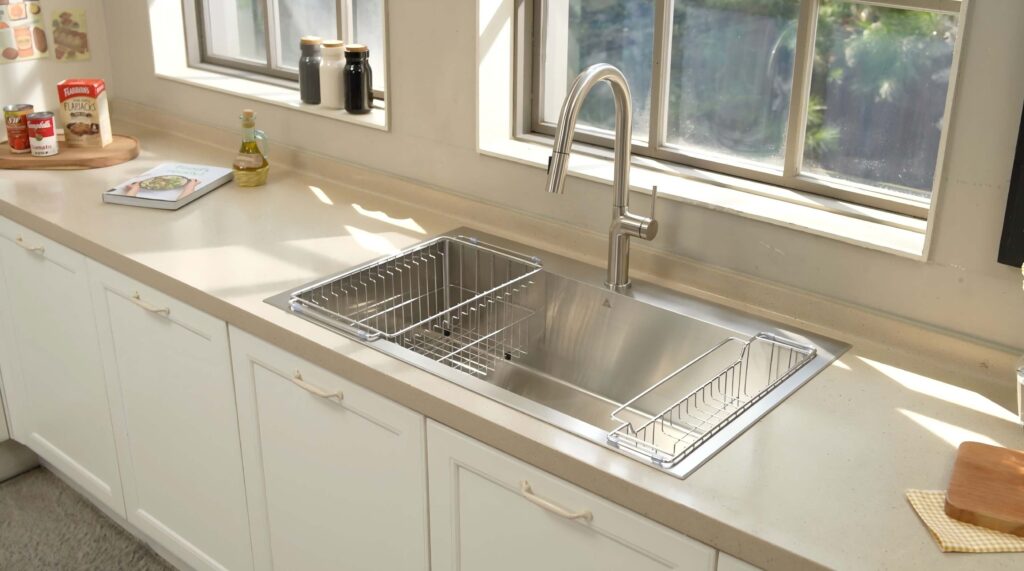
Undermount: the sink is mounted under the countertop — no rim. The countertop edge meets the bowl like a well-made seam, which is why undermount designs remain popular in modern kitchens. You can see typical layouts in our undermount sink selection.
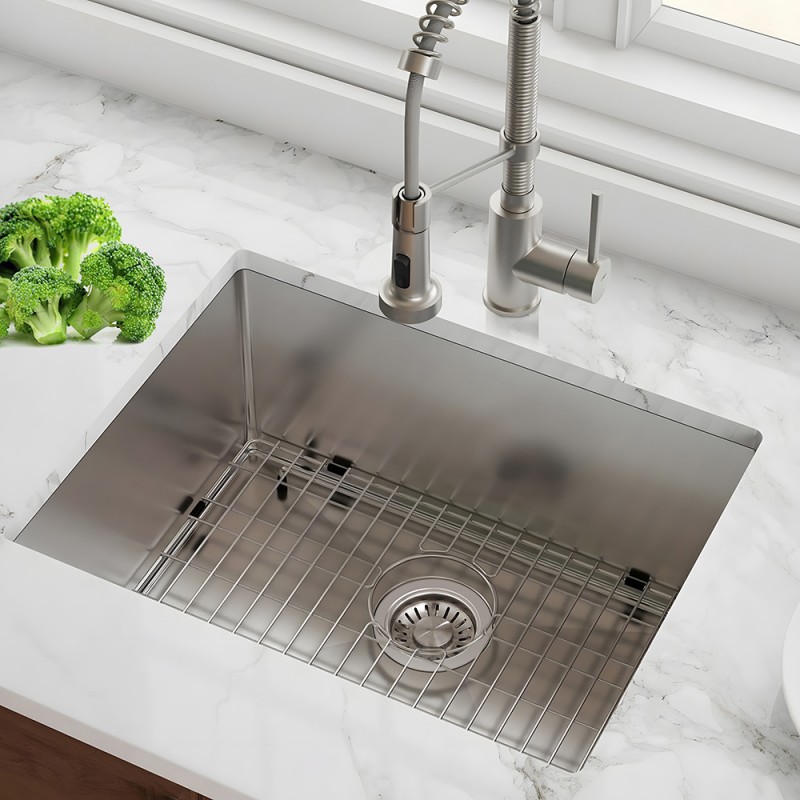
Why this simple physical difference matters: it changes how crumbs move, how water behaves, how forgiving the installation is, and how the kitchen ages.
Practicality and low-stress ownership. Drop-ins are forgiving. If your counter edge is chipped, or you’re working with laminate, drop-ins hide the mess. They’re cheaper to buy and install. Renters, first-time remodelers, and anyone wanting a quick swap later love drop-ins because replacement is straightforward — you don’t have to tear out the countertop.
The everyday win: if you want to avoid complicated carpentry and still have a functional kitchen that won’t leak into the cabinet the first time someone leaves a rag under the rim for a week — drop-in is your friend.
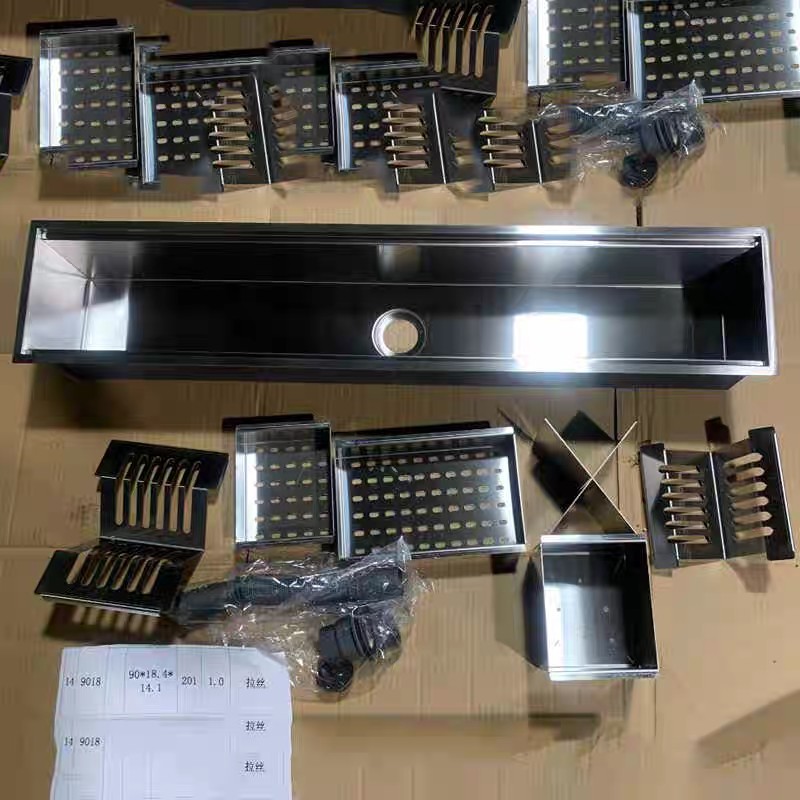
The small, repeated pleasure of a clean swipe. An undermount turns the countertop into a continuous surface. Wipe crumbs, push scraps into the sink, and they go — no lip catching your rag. For people who cook a lot, or who host, that fluid motion saves small amounts of time and annoyance every single day. It also looks like a finished kitchen — the kind that photographs well and gives buyers a nice feeling. This is also why undermount designs are commonly paired with integrated features such as workstation sinks, where accessories slide smoothly across the basin.
The everyday win: if you crave a tactile, seamless kitchen experience and you’re investing in stone or solid-surface counters, undermounts feel like the final, satisfying touch.
Why “looks good” sometimes costs you later. Drop-ins collect grime under their rim. It’s invisible until it smells. Undermounts rely on a perfect bond to your counter — and if the countertop flexes, the seal can fail. I’ve seen undermount installations where the owner saved on a cheap fabricator; within two years the seam had hairline gaps and stains from trapped water. I’ve also seen drop-ins with rusted rims because someone used abrasive cleaners on a cheap finish.
Lesson: the type matters less than the quality of materials and the quality of the installation.
Pick the pair that behaves well together.
Pro tip: if you love the undermount look but have laminate, sometimes it’s worth replacing the counter — the upgrade pays off in both looks and maintenance.
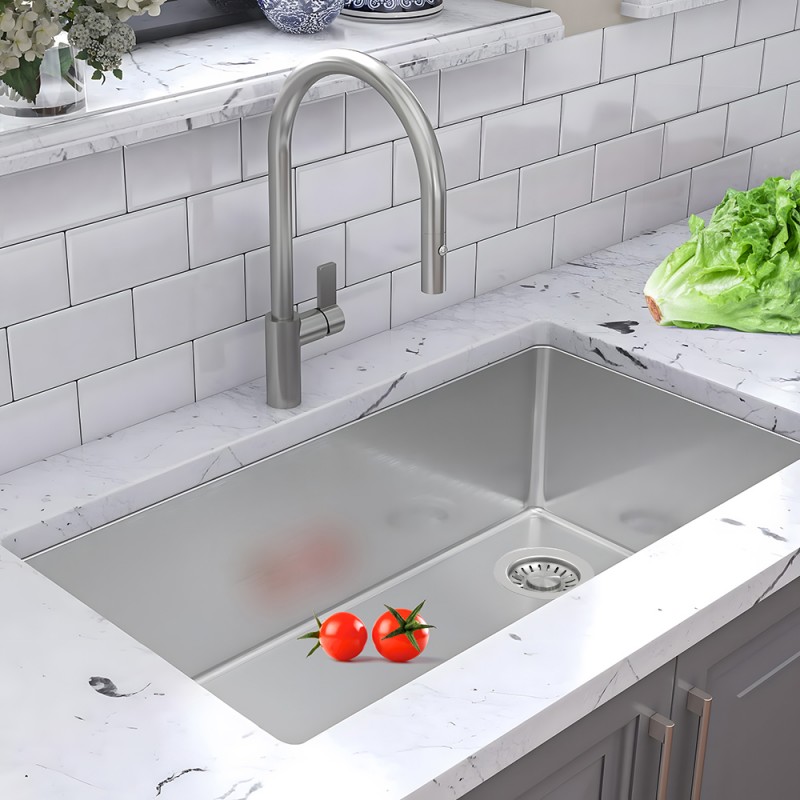
Not all sinks are created equal. Stainless steel comes in different gauges; thicker steel means less flex and quieter washing. Composite granite looks seamless with stone counters but is heavy and needs strong support. Fireclay and cast-iron are beautiful but absurdly weighty and more likely to require reinforcement for undermount applications.
Practical rule: match the sink material to your lifestyle. Loud, thin steel in a chef’s kitchen gets annoying. Durable, thicker materials feel better every day — especially when paired with the right sink accessories that reduce noise and improve workflow.
This is where cost and warranties live. Undermounts require sturdy support, a flat countertop edge, and a meticulous seal. Drop-ins are more tolerant but still need a proper bead of sealant and secure fasteners. The cheapest install is rarely the wisest — a botched undermount is an invisible problem that shows up as water damage later.
Ask your installer these specific questions: how will you support the sink? what sealant do you use? do you guarantee against leaks for X years? A confident local fabricator will answer those easily.
Daily and monthly rituals that matter more than marketing claims.
Small time investment, big payoff: a ten-minute monthly check keeps both types functioning beautifully for years.
Think like an owner, not a price shopper. Drop-ins cost less upfront and are cheaper to replace. Undermounts cost more to install — but if you have a stone countertop, undermounts protect the edge and are worth the premium for the look and usability.
Rule of thumb: if you plan to live with the kitchen for 10+ years and you have a solid countertop, spend more on a proper undermount installation now and save frustration later.
Answer these quickly and you’ll know:
Real things people regret after the remodel.
How to avoid: plan with measurements, talk to the countertop fabricator before buying the sink, and get a written installation plan and warranty.
If you want one sentence: choose the sink that removes friction from your life.
The “right” sink is the one you hardly think about because it quietly works — not the one you regret during late-night dish duty.