Redefine your kitchen experience
Our handmade sinks are created by experienced craftsmen, and each piece is a unique work of art.

A Small Change That Quietly Improves Daily Kitchen Life
Why A Tiny Accessory Changes How You Use Your Kitchen
I didn’t expect a sink rack to matter until the morning I knocked a heavy sauté pan across a stainless basin and saw that faint scratch that never left. That rack that cost less than a lunch turned out to be an everyday shield — and a small habit-changer. A sink rack gives you a place to dry, prep, cool, and protect — and when used the right way it saves seconds that add up into calmer dinners and fewer repair headaches. Below I’ll walk through the real benefits, honest trade-offs, and tiny rituals that make these tools actually useful.
A Dedicated Spot Cuts Friction And Saves Minutes
When everything has a place, you stop doing the little frustrating shuffle: wash, wonder where to put it, towel, repeat. A rack creates a staging lane for clean dishes and tools — so you can rinse, set, and move on. Try this for a week: designate one basin for rinsing and always place washed items on the rack. You’ll find fewer towels on counters and a faster clear-up after meals. For families, it’s also a tiny habit machine: kids learn exactly where to place cups, which cuts arguments and nagging.
Real trade-off: If the rack is the wrong size or sits under a low faucet, it becomes annoying. Measure once and pick the style that fits your routine.
A Simple Buffer That Prevents Scratches And Wear
Think of a rack as insurance. Pots and pans sliding across bare steel leave micro-scratches; over years those marks accumulate and the finish looks tired. A rack spreads the impact and keeps metal off metal. That means fewer polish jobs or expensive replacements later.
Practical note: spend a little on a good grade (304) and silicone-capped edges — a $30 rack will often prevent damage that would cost hundreds to fix.
Raised Surfaces Dry Faster, Which Means Less Smell And Mold
Wet surfaces + heat = microbial trouble. A raised rack lets water drain away immediately and air circulate under dishes so things dry faster. Faster drying means fewer smelly puddles, less mildew, and a sink that doesn’t feel gross five minutes after use.
Tiny habit: after washing, give each item a quick shake and set it on the rack so it catches airflow. Also include the rack in your weekly clean so it doesn’t become the next problem.
Turns The Sink Into Extra Counter Or Cooling Space
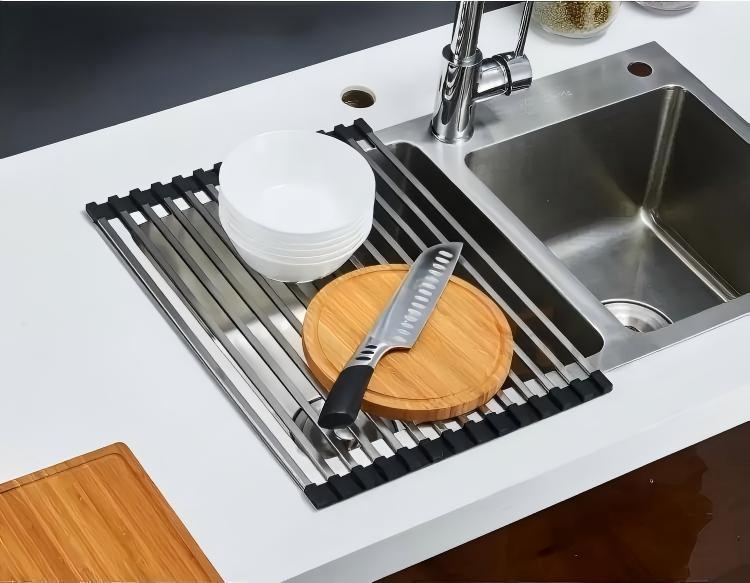
If countertop real estate is precious in your kitchen, a rack is like gaining another shelf. Bridge a cutting board across the sink and the rack becomes an instant prep station. Use it as a cooling trivet for hot pans or a rinse shelf for berries so your counters stay dry.
Chef’s note: I use a roll-up rack as a portable “third hand” — it holds utensils or a half-cut lemon off the wet counter during busy prep.
Small Behavior Changes That Save Water And Energy
Racks make it easier to air-dry instead of drying with cloths, and they support batch washing: wash multiple items in one soapy basin, rinse them on the rack, and done. That cuts water and laundry. It’s not dramatic overnight, but over months you’ll save liters and reduce detergent use.
Reality check: the rack doesn’t save water by itself — you have to adopt the batch-and-air-dry routine.
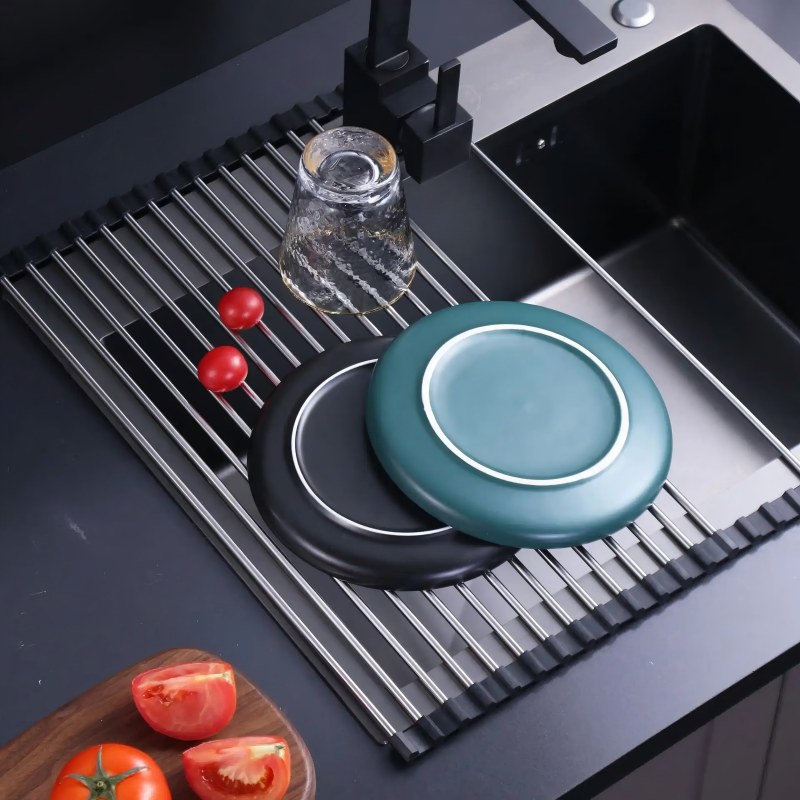
Stretch-To-Fit Convenience For Changing Needs
Good for apartments or double-basin sinks; they expand to fit. Watch out for joints that can trap grime — plan to clean them occasionally.
Roll-Away Storage And Multi-Use Trivet Function
Perfect for tight kitchens. Lightweight and storable, though they’re not ideal for heavy cast-iron cookware.
Sturdy Frames That Take Real Kitchen Work
These sit on small feet inside the sink and handle heavy pots and frequent use. They protect the finish best but take more room to store.
Add A Vertical Shelf To Free Up Counters
These lift drying into the airspace above the sink — great in small apartments. Measure for faucet and cabinet clearance first.
Made-To-Measure For Farmhouse, Apron, Or Odd Sinks
When your sink has an unusual shape, a custom rack returns a near-built-in look — pricier, but neat and precise.
Measure Usable Width, Depth, And Faucet Clearance
Don’t guess. Check how the rack will sit with your faucet and cabinet doors.
Pick Strength Or Flexibility Based On How You Cook
Cook heavy meals? Choose a grid. Like to tuck things away? Roll-up may be best.
Small Extras That Make Daily Use Easier
Silicone feet, removable trays, and utensil holders add real convenience.
Choose 304 Stainless And Solid Construction
304 stainless is the everyday workhorse; look for sturdy welds and finished edges so the rack lasts.
Rinse After Heavy Use, Soak And Wash Weekly
A quick rinse after greasy jobs and a weekly scrub with warm soapy water keeps the rack hygienic.
Use Soft Sponges Or Microfiber Cloths
Steel wool can scratch and remove protective finishes — don’t do it.
Wipe Or Air-Dry To Avoid Mineral Spots
In hard-water areas, a vinegar wipe now and then clears mineral deposits.
Check Silicone Caps, Welds, And Rods Monthly
Replace cracked silicone or bent rods before they damage the sink or harbor mold.
Most Racks Simply Rest Across Or Sit Inside The Basin
Adjustable racks expand to fit; grid racks sit on feet; over-the-sink models clamp. Measure before you buy.
Yes — Just Keep It Clear Of The Disposal Opening
Don’t trap debris near the disposal. Move the rack if you need to run it.
Yes — Look For Custom, Adjustable, Or Wider Options
Farmhouse sinks are wider and deeper; a custom or wide rack fits better and looks intentional.
Absolutely — It’s A Mini Workbench For Small Kitchens
Use It As A Trivet, A Prep Bridge For Cutting Boards, Or A Rinse Shelf For Produce.
A Small Investment That Keeps Paying Every Day
A sink rack is unglamorous but effective. It protects your sink finish, speeds up the cleanup loop, creates functional space, and nudges you toward greener habits. The trick is to pick a style that fits your sink and your cooking patterns, care for it a little, and use it deliberately — then it stops being an accessory and starts being a habit that makes your kitchen easier.