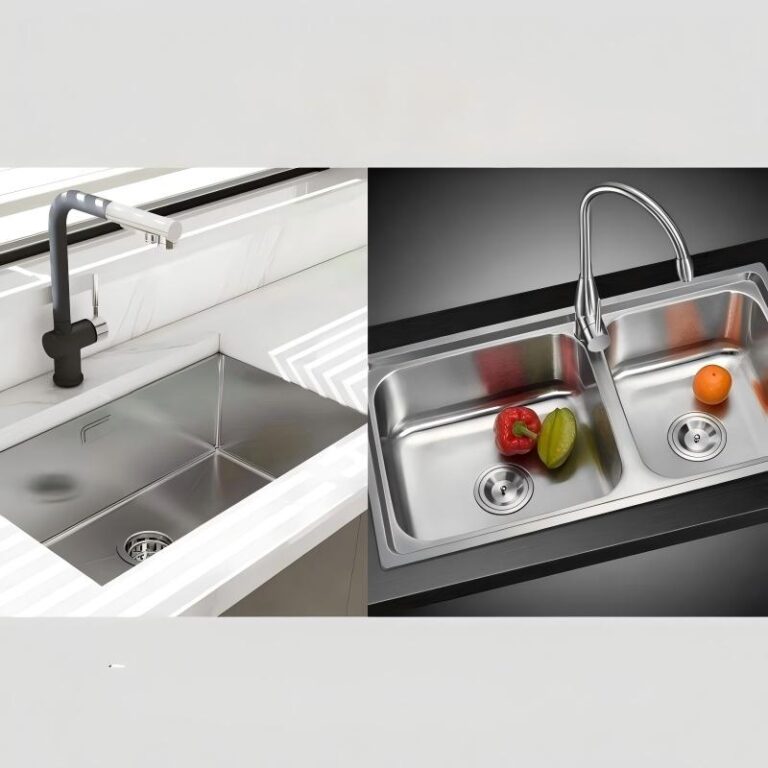
Redefine your kitchen experience
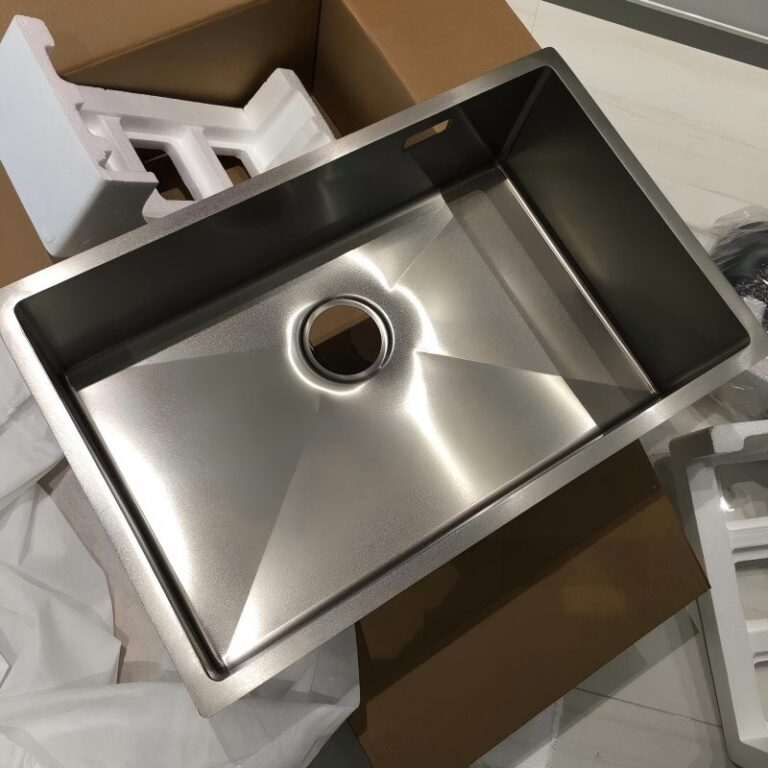
Our handmade sinks are created by experienced craftsmen, and each piece is a unique work of art.

In bathroom renovation, the choice of sink affects not only everyday convenience but also the overall style and lifespan of the space. Traditional stainless steel sinks have long dominated the market thanks to their classic durability and high cost‑performance ratio, while PVD (Physical Vapor Deposition) coated sinks have recently gained ground with superior surface hardness and a wide range of color options. This article compares PVD coated sinks with traditional stainless steel sinks across six dimensions: material properties, scratch resistance, corrosion resistance, cleaning and maintenance, aesthetic diversity, and long‑term cost. Research shows that PVD coated sinks offer clear advantages in durability and appearance, but their higher initial investment requires consumers to weigh their actual needs. Whether you prioritize extreme durability or personalized design, this article provides a scientific basis for your purchase decision.
The bathroom is one of the most frequently used spaces in any home, and the sink—as the core area for daily washing—plays a critical role in user experience and maintenance costs. For years, stainless steel sinks have been the top choice for many households due to their strength, durability, and easy cleaning. However, with advances in materials science, a coating technology called PVD (Physical Vapor Deposition) is quietly reshaping the bathroom products market.
A PVD sink is not an entirely new sink material; it is essentially a stainless steel sink with a layer of metallic ions deposited onto its surface through a vacuum coating process. This coating, only 1–5 microns thick, gives the sink a completely different set of performance characteristics. So, faced with these two sink types—identical in base material but vastly different in surface treatment—how should consumers choose? This article will provide an in‑depth analysis.
Surface hardness is the core indicator of scratch resistance. Traditional stainless steel typically has a Vickers hardness of 200–400 HV, meaning that in daily use, metal utensils and cleaning tools can leave permanent scratches. In contrast, PVD coatings can reach 1000–2500 HV—5 to 10 times harder than standard stainless steel.
The fundamental reason lies in the PVD process: in a vacuum, metals such as titanium or zirconium are vaporized and then bond at the atomic level with the stainless steel substrate, forming a chemical rather than a purely physical attachment. This atomic‑level bonding gives the coating extreme density and adhesion—far superior to traditional painting or electroplating.
For families with children, bathroom sinks often endure accidental bumps from toys, metal containers, and other objects. PVD coated sinks demonstrate a clear advantage in these situations. A product description from Australian sink brand Abey notes that its PVD coated sinks are “both scratch‑resistant and impact‑resistant.” By contrast, even brushed stainless steel sinks will accumulate a network of fine scratches over years of use, causing the surface to lose its original luster.
It is important to note, however, that PVD coatings are not absolutely indestructible. Extreme impacts from hard objects can still damage the coating, but overall durability far exceeds that of traditional stainless steel.
The most frustrating issues for homeowners with traditional stainless steel sinks are water spots and fingerprints. Because the surface is naturally hydrophilic, if not dried promptly after each use, noticeable water marks remain. Franke’s commercial product maintenance guide clearly states that stainless steel sinks “are best maintained by frequent, regular cleaning” and recommends “rinsing and drying daily.”
An even more serious concern is that the passive film on stainless steel can be damaged by improper cleaning. Research from the National Materials Corrosion and Protection Data Center shows that construction debris, iron items, and chemical cleaners can all compromise the chromium‑rich oxide layer that makes stainless steel “stainless,” potentially leading to rust.
PVD coated sinks significantly reduce the intensity of daily upkeep. The coating is naturally hydrophobic and oleophobic, making water spots and fingerprints less likely to adhere. Many users report that PVD coated sinks require cleaning only half as often as traditional stainless steel ones.
A word of caution, however: PVD coatings are more selective about cleaning agents. Strong acids and alkalis may damage the coating, so it is best to use only mild soapy water and a soft cloth. Dark PVD finishes (such as matte black) are highly resistant to stains but actually show fingerprints more readily—a factor consumers should consider when choosing a color.
Traditional stainless steel sinks offer essentially only one color option—silver‑gray—with subtle variations in texture achieved through brushing, mirror polishing, or sandblasting. While this neutral appearance matches almost any décor, it rarely becomes a design highlight. For younger families seeking personalized interiors, this lack of color variety can be a limitation.
By selecting different target materials and reactive gases, PVD technology can produce a rich spectrum of colors: titanium nitride yields elegant gold, zirconium nitride gives a romantic rose gold, and titanium carbonitride results in a deep matte black. German bathroom brand HEWI, for example, uses PVD technology in its System 900 series to achieve copper, brass, and nickel metallic finishes.
This means bathroom sinks can finally escape their role as a “silver background” and become a focal point of the space. Whether it’s a black industrial‑style sink or a rose gold faucet for a light luxury look, PVD technology can realize the vision.
Stainless steel’s corrosion resistance comes from its chromium‑rich oxide layer (passive film). However, this protective layer is not invincible. Prolonged exposure to chlorinated water, acidic cleaners, or salt can degrade the passive film and trigger localized corrosion.
Franke’s maintenance guide specifically warns: “Do not use chlorine bleach to clean stainless steel, as chlorine attacks the protective layer that makes stainless steel truly ‘stainless.’” Kindred’s FAQ also notes that iron particles left by cast iron cookware can cause rust spots on stainless steel surfaces.
PVD coated sinks offer a two‑layer protection mechanism. First, the PVD coating itself is highly chemically inert, effectively blocking corrosive substances from reaching the substrate. Second, even if minor damage occurs to the coating, the underlying stainless steel still retains its inherent corrosion resistance.
For homes in coastal areas or regions with hard water, the advantages of PVD coated sinks are especially pronounced. Studies show that PVD coatings exhibit superior corrosion resistance to traditional stainless steel in humid environments.
PVD coated sinks typically cost 20–50% more than comparable traditional stainless steel sinks. This premium stems primarily from the investment required for vacuum coating equipment and the more complex manufacturing process.
However, when the time horizon is extended to 10–15 years, the picture shifts. Traditional stainless steel sinks may need replacement due to scratches, rust spots, or require frequent purchases of specialized cleaning agents. Thanks to their superior durability, PVD coated sinks can significantly reduce replacement frequency and maintenance costs.
For high‑end homes or large families, the long‑term value of a PVD coated sink often outweighs the initial price premium. For rental properties or transitional housing with tighter budgets, traditional stainless steel remains an economical and sensible choice.
| Comparison Aspect | Traditional Stainless Steel Sink | PVD Coated Sink |
|---|---|---|
| Surface Hardness (Vickers) | 200–400 HV | 1000–2500 HV |
| Scratch Resistance | Moderate; prone to visible scratches | Excellent; highly abrasion‑resistant |
| Color Options | Silver‑gray only | Gold, black, rose gold, and more |
| Daily Maintenance | Requires drying after each use; rust prevention needed | Hydrophobic/oleophobic; easy cleaning |
| Corrosion Resistance | Good, but sensitive to chlorine and strong acids | Excellent; dual‑layer protection |
| Initial Price | Lower | 20–50% higher |
| Service Life | 10+ years | 10–15+ years (with stable coating) |
The comparison between PVD coated sinks and traditional stainless steel bathroom sinks ultimately comes down to a trade‑off between “upfront investment” and “long‑term returns.” Traditional stainless steel sinks, with their accessible price and reliable performance, remain a safe choice for the mass market. PVD coated sinks, on the other hand, represent the direction in which bathroom products are evolving—combining the durability of engineering materials with the aesthetic appeal of decorative art.
Regardless of which sink you choose, the quality of the base material is the decisive factor. Industry experts recommend opting for 304 or 316 food‑grade stainless steel and avoiding lower‑grade materials like 201. At the same time, proper usage and cleaning habits are just as important—even the most advanced PVD coating cannot withstand prolonged scrubbing with steel wool.