Redefine your kitchen experience
Our handmade sinks are created by experienced craftsmen, and each piece is a unique work of art.

If you’ve ever remodeled a kitchen, you know this: some decisions feel big, but choosing a sink material feels personal. You touch it every day. You hear it, clean it, lean on it, and sometimes slam a pot into it when dinner goes wrong. A sink is not a decorative item — it’s the one piece of the kitchen that absorbs the entire rhythm of your daily life.
This is why “What is the best material for a kitchen sink?” is both the most common and the most complicated question I get from homeowners. Most articles online answer it as if it’s a math problem. It isn’t. It’s closer to choosing the right pair of shoes — the wrong fit will quietly annoy you every day.
Below is a straightforward, human explanation of each material, based on what people actually complain about, love, or eventually regret.
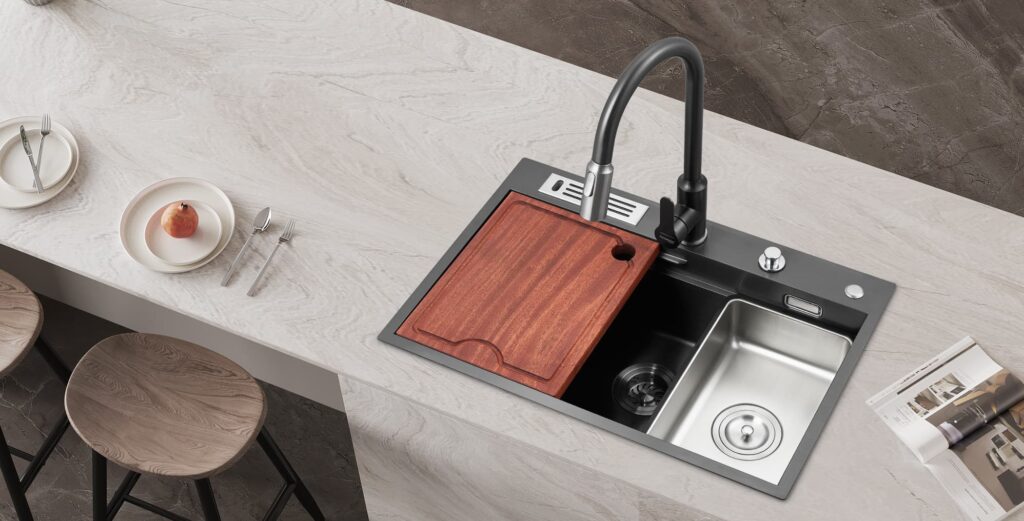
You can change faucets easily. Countertops can be polished. Cabinet fronts can be repainted.
But your sink? Once it’s installed, you’re committed. And the material decides almost everything:
In short: the material sets the tone of your daily kitchen life, far more than the shape or brand.
For more insight into overall sink styles, you can browse our homepage for inspiration.
Most professional kitchens use stainless steel for one reason — it keeps up. And if your household goes through phases of intense cooking, lazy nights, and chaotic weekends, stainless tends to be the material that says, “It’s fine, I’ve seen worse.”
A good stainless sink has a slightly soft clink when you set a glass down, and it dulls noise instead of amplifying it. Over time it develops a brushed pattern from tiny scratches, and honestly, the older it gets, the better it looks. It ages like denim.
If you’re considering stainless options, take a look at our undermount sinks for practical modern designs.
The only people who dislike stainless are those who want a sink that looks untouched forever. Stainless steel won’t give you that. It gives you honesty, not perfection.
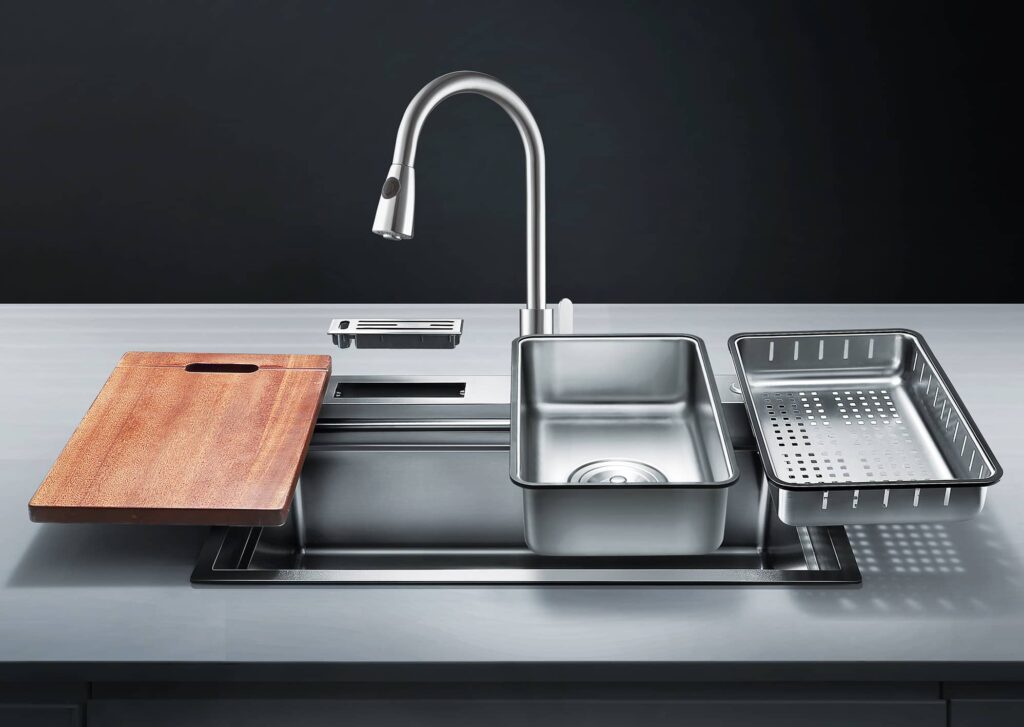
A fireclay sink has a specific feel. When you run your hand across the glaze, there’s a firmness to it — smooth, heavy, almost old-world. These sinks light up a kitchen. Even on cloudy mornings, they reflect light in a way stainless never can.
They stay clean with surprisingly little effort. Tomato sauce? Gone. Coffee stains? Not a chance. But fireclay has one rule: don’t drop heavy cast iron pans into it. The material is strong, but the glaze can chip if the impact is sharp enough. It’s like a beautiful ceramic mug — sturdy, but you still treat it with some respect.
Homeowners who love a bright, classic, farmhouse aesthetic almost always fall for fireclay — especially when paired with a clean apron-front look like our apron sinks.
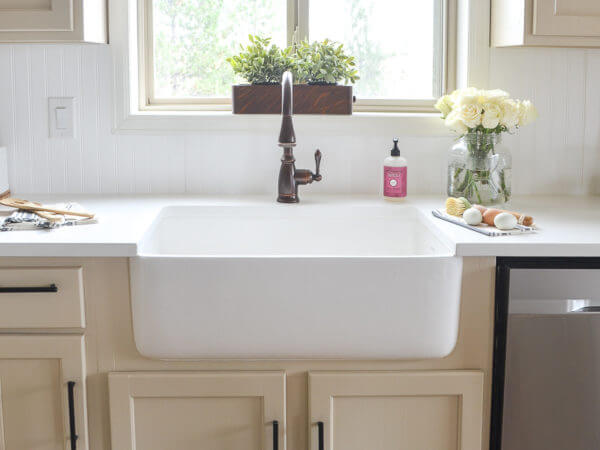
Cast iron sinks are the tanks of the kitchen world. When you place a pan in one, the sound disappears — it’s like the sink absorbs the noise. If you value quiet, this material feels like a small luxury.
But it comes with weight. Literally. A cast iron sink needs strong cabinet support. And, like fireclay, its enamel surface can chip if something sharp hits it wrong. Most people who choose cast iron do so because they grew up with one and know exactly how it behaves. It gives a space a sense of permanence — the kind that makes a kitchen feel rooted and established.
If you’d like a quieter workspace, our workstation sinks add even more functionality to this timeless feel.
Composite sinks attract people who want a modern, matte look without the grocery list of maintenance steps. They’re surprisingly good at hiding water spots and fingerprints. And the texture — slightly velvety, not cold — tends to surprise homeowners in a good way.
In actual use, they rarely stain. They don’t sound metallic. They don’t show every scratch. They just exist, quietly doing their job.
The one thing they dislike is direct heat from pans. As long as you’re not placing a 200°C pot directly in the bowl, a composite sink lasts years looking almost exactly the same as the day it was installed.
If you’re browsing compact options, our small kitchen sinks offer great space efficiency paired with modern finishes.
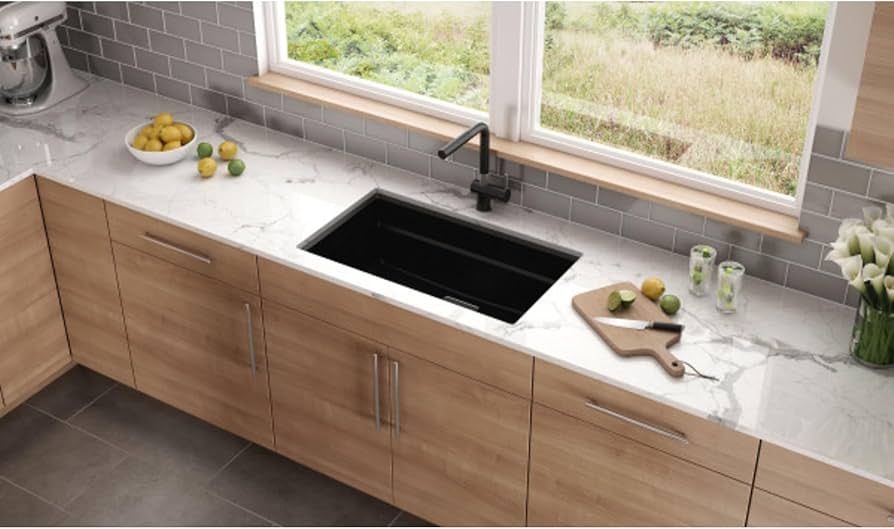
If you love clean, minimalist kitchens where everything feels like one continuous piece, a solid-surface sink is usually the go-to. It blends right into the countertop, so crumbs and spills simply wipe down without getting stuck along an edge.
The texture is warm and soft, and small scratches can be sanded out, which is a blessing for busy households. The downside? It doesn’t like extreme heat — so this material works best in kitchens where people are more careful with cookware.
You can also find inspiration in our topmount sink designs if you prefer a simpler installation with a similar visual effect.
Copper sinks are for people who don’t want their kitchen to look like everyone else’s. They change color. They lighten. They darken. They react to citrus and salt. And somehow the result always feels intentional, even artistic.
If you want a sink that looks identical every day, copper will drive you insane. But if you enjoy materials that age naturally, copper becomes something you’ll admire every morning — not because it’s perfect, but because it changes with you.
There isn’t a universal winner. There is, however, a best match for your habits:
A sink is part of your daily routine, and choosing the right material means you’ll move through your kitchen with less frustration — which matters far more than people realize.