Redefine your kitchen experience
Our handmade sinks are created by experienced craftsmen, and each piece is a unique work of art.

what you’ll actually learn and why it matters.
Choosing a sink often feels like a small renovation detail — until you’re wiping water stains every morning or watching a shiny new finish get scratched after one heavy pan. This article isn’t a dry spec sheet. It’s written for people who use their kitchen: practical tips, real trade-offs, quick checks to spot a good sink from a bad one, and simple maintenance moves that actually keep a sink looking great five years from now.
a short, plain-language explanation and why it matters in daily life.
304 is the “everyday” stainless used in cookware and sinks. It’s called 18/8 or 18/10 because of chromium and nickel content — the combo that gives it corrosion resistance and makes it formable. In kitchen terms: it won’t react with food, it’s easy to shape into attractive bowls, and it tolerates the normal knocks and splashes of cooking life.
a short definition you can use as a quick reference.
304 is an austenitic stainless alloy with roughly 18% chromium and 8–10% nickel, plus iron and small trace elements. That chemistry creates a thin protective oxide layer that keeps iron from rusting in everyday conditions.
the one-line spec buyers should scan for on a datasheet.
the everyday advantages, without the marketing fluff.
what 304 handles well — and the real situations where it needs help.
For ordinary kitchen water, soap and food acids, 304 does its job. The passive chromium oxide layer is clever: scratch it, and it can heal itself with exposure to air. But put it in long contact with strong chloride sources (think: sea spray, concentrated saline brines, or bleach left on the surface) and you risk pitting. That’s where 316 (with molybdenum) is stronger — but for most homes, 304 is fine.
how that film protects you in everyday use.
That invisible film is why a quick scrub or a dropped fork doesn’t turn a sink into rust overnight. The caveat: the film needs oxygen to repair itself, so don’t wrap a wet sink or leave salty water sitting in it all night.
a practical, everyday breakdown.
Citrus juice, vinegar, dish soap — all fine in brief contact. Saltwater, brine solutions and concentrated bleach for long periods — less fine. If you do a lot of pickling or brining in-sink, rinse well afterwards.
what to expect over years.
304 won’t “patina” like copper; it keeps a bright, neutral look. Little brown rust specks usually come from iron filings or steel wool residue, not the stainless core — and they’re fixable.
direct answers people actually worry about.
Yes — 304 is widely used in food-contact applications and is safe when made to spec. The real hygiene risks come from food debris, trapped moisture and poor seams — not the alloy itself. Clean the drain areas and corners regularly.
what to ask for when buying.
Ask for a material certificate (MTR) showing the alloy grade. Reputable manufacturers won’t blink at this — sketchy ones might.
why the finish matters.
A smooth finish reduces tiny crevices where bacteria hide. Avoid sinks with rough welds or exposed seams near food-contact areas.
how they stand up to real kitchen life — hot pans, heavy pots, and daily wear.
304 is mechanically robust for household use. Dents happen with heavy impact, and surface scratches are common with abrasive cleaners or dragged cast-iron. But functionally, the sink usually remains sound — scratches are mostly cosmetic and repairable.
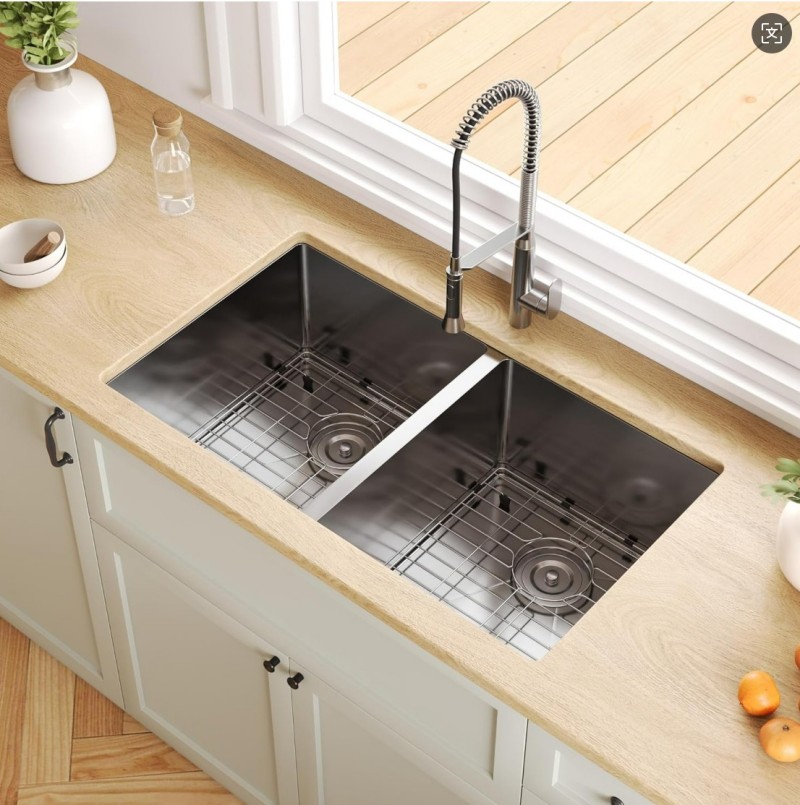
practical implications of gauge and design.
Gauge helps but don’t let it be the only decision: 16–18 gauge is typical (16 thicker than 18). A well-braced 18-gauge sink can flex less and outperform an unsupported 16-gauge sink. Look at reinforcement ribs and mounting hardware.
don’t worry about hot pans or the dishwasher.
Normal cooking temperatures and dishwasher cycles won’t hurt 304. This isn’t a lab furnace material, but it handles household heat easily.
how it ages.
It scratches, yes — but color and overall look remain stable. Brushed textures age more gracefully than mirror finishes.
the real reasons you’ll spend less time scrubbing.
A dense, smooth surface and grain-consistent finishes mean food and grease don’t cling. Rinse and a quick wipe usually do the job.
how finishes affect cleaning.
The finer the finish and the better the polish, the easier it is to remove residue. But super-smooth mirror finishes show water spots and fingerprints faster.
pick a finish that matches how you live.
If you hate fingerprints, get a satin/brushed finish. If you entertain rarely and love the mirror look, go glossy — but expect more upkeep.
the material itself won’t trap smells; trapped food will.
Flush food scraps and avoid leaving wet rags or scraps in the basin.
why designers keep recommending stainless.
Neutral tone, modern look, and the ability to be formed into under-mount, top-mount, apron-front and custom designs means 304 fits many kitchens.
it pairs with almost any countertop.
Wood, quartz, concrete — stainless wears well next to them all.
lots of shapes and integrations are possible.
You can get integrated drainboards, pop-up drains, single or double bowls, and apron fronts in 304.
a simple truth: it rarely goes out of style.
With the right finish it looks current for many years.
things people assume that aren’t quite true.
There’s a lot of “rules of thumb” out there that don’t survive inspection — here are the biggest offenders.
why thickness alone isn’t the whole answer.
Yes, thicker metal is stiffer and quieter, but a poor design or cheap reinforcement undermines that advantage. Check bracing, radius corners and clips.
don’t be fooled by shine.
High gloss can hide poor forming and will show scratches. Brushed finishes often win in lived-in kitchens.
why your sink’s sound matters.
A sink with full undercoating feels and sounds more premium. That hollow clang? That’s what you get when damping is skimped.
a realistic routine you will actually do — not a chore list you’ll ignore.
Daily: rinse and give a quick wipe, especially around drains.
Weekly: mild detergent with a soft cloth; rinse and dry.
Monthly: baking soda paste for stubborn spots, applied gently along the grain.
Occasionally: food-grade mineral oil or polish to reduce water spotting.
Avoid: steel wool, gritty powders and leaving concentrated bleach or salt solutions on the surface.
a minute now saves an hour later.
Mineral deposits and hard-water rings are the most annoying marks — a quick dry prevents them.
don’t overcomplicate cleaning.
pH-neutral cleaners keep the passive film intact without extra effort.
rinsing is the single most helpful habit.
If you use bleach occasionally, rinse immediately and wipe dry.
a tiny trick that helps.
A thin coat of mineral oil occasionally reduces spotting and makes cleaning easier.
money talk: how 304 performs over the lifetime of a sink.
Cost up front is mid-range. Lifetime: low maintenance, long service life — you’ll likely get decades of use. Repairability and resale value make it a sensible investment for most kitchens.
the honest answer — and quick fixes if it happens.
Not under normal home use. When rust shows up, it’s often from embedded iron dust or abrasive use. Clean gently with a non-abrasive cleaner and re-passivate (rinse and air-dry); persistent spots can be removed with mild acid cleaners carefully used per instructions.
simple, effective checks you can do without a lab.
yes — and why that’s usually OK.
Stainless scratches easier than stone, but scratches are mostly cosmetic. Brushed finishes hide them best. Avoid dragging heavy cast-iron pans across the bowl; use sink grids if you want extra protection.
yes — and what to check before you go ahead.
Under-mount installation is common and looks clean, but confirm the sink has a finished rim, adequate thickness or reinforcement, and that your countertop material (granite, quartz, or solid surface) is suitable. Get a professional installer for a watertight seal.
a down-to-earth summary.
It’s food-safe, easy to clean, flexible in design, and cost-effective — a pragmatic, dependable choice for most households.
fast action rules you can use right now.
a concise checklist to use in the store or with a supplier.
small real-world examples that help decisions stick.
a human nudge so the reader can move on with confidence.
If you want a sink that’s hygienic, reasonably priced, and low-maintenance for daily cooking life, 304 is an excellent choice. Focus on trusted manufacturers, good engineering (not just gauge), and a finish that matches how you live. If you live in a salty environment or do specialized commercial work, consider upgrading to higher alloys.
1.Will a 304 sink rust?
Rarely — usually only from external contamination or harsh chloride exposure.
2.Which gauge should I pick?
16–18 gauge is common — but prioritize good reinforcement.
3.How do I fix scratches?
Use grain-following cleaners or a non-abrasive polish; deep damage may need professional finishing.
4.Can I put boiling water or hot pans in it?
Yes — normal kitchen temperatures are fine.
5.How to verify 304?
Ask for an MTR; magnet and visual checks help as quick screens.