Redefine your kitchen experience
Our handmade sinks are created by experienced craftsmen, and each piece is a unique work of art.

I learned how to care for stainless steel the hard way: by wrecking one. Years ago I attacked a brand-new sink with a green scrub pad because a spaghetti stain wouldn’t budge. The pad left tiny brushed scratches that caught light like tiny rivers. I remember feeling stupid — and that’s where this whole thing started: not with the textbook, but with the “oh no, what did I just do?” moment.
If you want the short version: the sink behaves like skin — gentle cleansers, good moisturizers, and fewer violent scrubs. If you want the long version (and the things people don’t typically tell you), keep reading.
Look closely. The sink has faint lines — a brushed finish. That’s the grain. You’ll ruin the look if you scrub across it. Always work with the grain. That’s the tiny habit (two seconds to check) that saves you hours later.
Also: drying matters more than most people think. You can spend ten minutes polishing and then sit back while tap water marks the surface. Drying after every use is the low-effort secret.
Learn more about undermount sinks
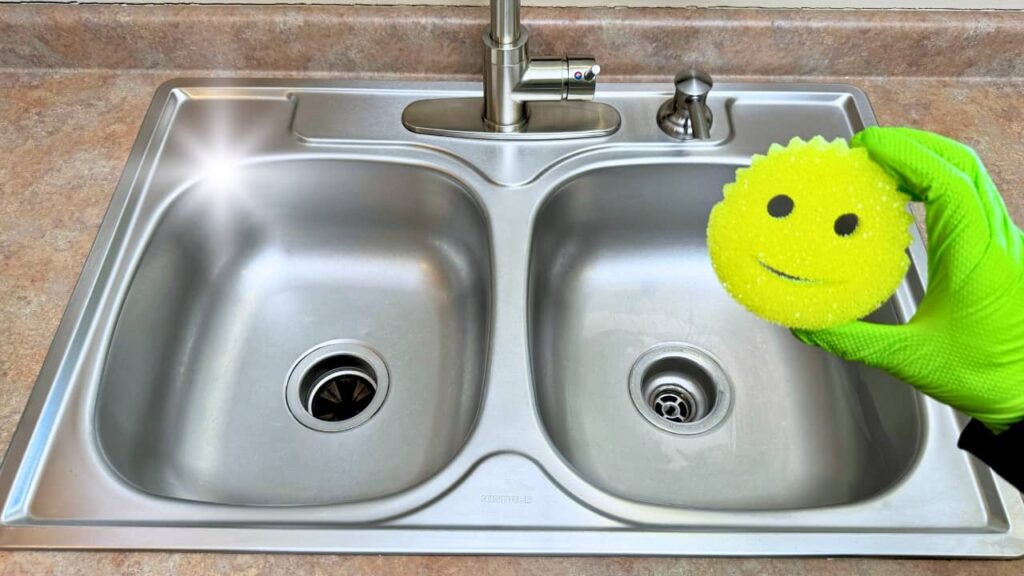
After dinner, do this: – Rinse the basin to remove food bits. – One drop of dish soap on a soft sponge; wipe along the grain. – Rinse. – Dry with a microfiber cloth.
That’s it. It takes less time than brewing a pot of coffee and prevents 90% of the problems that end up needing heavier cleaning.
Explore workstation sink options
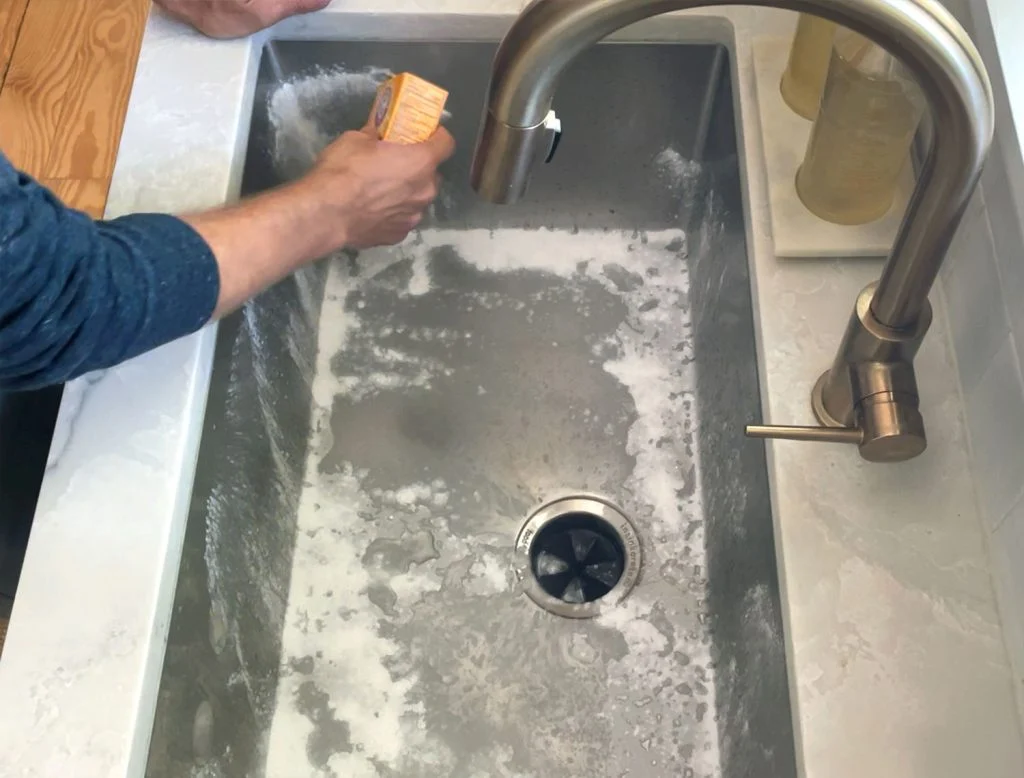
This combo is everywhere — and for good reason — but I’ll tell you how to make it actually work.
If your sink had a bad week, repeat once. If it still won’t budge, move up to a specialized stainless cleaner — but only after testing in a hidden area.
View durable 304 stainless steel sinks
Hard water marks are stubborn because they’re mineral deposits. Quick fixes don’t always work. Try this:
– Soak paper towels or a cloth in white vinegar and lay them over the stained areas. – Give it 10–20 minutes. Walk away. Make tea. Come back. – Scrub gently with baking soda, rinse, dry.
If your house has very hard water, this can become monthly ritual work — or a reason to look into a water softener. (I don’t love selling appliances in blog posts, but if your tap leaves white halos on everything, it’s not the sink’s fault.)
Check out space-saving small kitchen sinks
Panic moment: tiny reddish-brown dots. Most folks assume their stainless steel is rusting. Here’s the real story: those dots usually come from external iron — a grocery can, cheap utensils, steel wool you used “just once.”
Fix it like this: paste of baking soda + water, apply, wait 10 minutes, scrub with the grain. If that doesn’t do it, a product containing oxalic acid will usually remove iron staining. Follow the label and rinse thoroughly.
And please: never use steel wool. Ever. It leaves microscopic metal fibers behind that will rust later.
See rust-resistant bottom grids
Want it to look cared-for without being high maintenance? Use a small drop of food-grade mineral oil (the kind for cutting boards). Rub it in the direction of the grain with a cloth and buff. It makes water bead and hides tiny micro-scratches. Do this once every 1–2 weeks, or whenever you want the sink to look “finished.”
Weird but true: it’s the difference between “clean” and “intentionally looked-after.”
Explore accessories to protect your sink
Light scratches: yes, sometimes. Use a stainless-steel polish made for brushed finishes and buff gently with a pad that follows the grain. Deep scratches: probably not a DIY fix. If the sink has been through a lot, resurfacing is possible but pricier than most people expect. Weigh that against replacing the sink.
None of these are catastrophic on their own, but all of them add up.
If you get into pitting (tiny, deep holes) or large rust areas, don’t try to “fix” everything yourself with aggressive chemicals. Call a professional refinisher. It’s often cheaper than replacing a high-end sink and avoids making an expensive mistake.
You don’t need a chore chart. Try this simple pattern: daily quick clean and dry; weekly baking soda massage; monthly oil polish. That’s it. Do it for a few months and you’ll stop staring at the sink like it’s a problem. It becomes background calm.
A sink is where things end and begin again: dishes go in, meals start and finish, small parenting battles happen over who rinses the spaghetti pot. Taking care of it is not vanity; it’s about preserving a small, useful part of daily life so that your kitchen feels easier, not cluttered.
Plus — small, consistent care saves time. The work you avoid later is the stuff that actually takes hours.