Redefine your kitchen experience
Our handmade sinks are created by experienced craftsmen, and each piece is a unique work of art.

People like clean answers. “How long does a kitchen sink last?” sounds like it should have one.
It doesn’t.
A sink doesn’t expire the way a warranty does. It wears into your routine. Slowly. Quietly. Until one day you realize you’ve been adapting to it instead of using it.
That’s usually when people start Googling this question — often landing first on brands like JSD Sinks when they start exploring replacement options.
In real kitchens, sinks rarely fail dramatically. What happens instead is death by small irritations:
None of these is a crisis. Together, they mean the sink has already outlived its useful life — even if it still looks fine next to modern workstation sink designs.
Before numbers, here’s something important: Most sinks are replaced for reasons other than structural failure.
That said, the table below reflects real-world replacement timelines, not optimistic manufacturer claims.
| Sink Material | Typical Physical Lifespan | When People Actually Replace It | Why It Gets Replaced (Real Reasons) |
| Stainless Steel | 20–30 years | 10–25 years | Noise, scratches, flexing, dated look |
| Granite Composite | 25–40 years | 15–30 years | Remodels, color mismatch, layout changes |
| Fireclay | 30–50 years | 15–25 years | Chipping, cracking, visual damage |
| Cast Iron (Enamel) | 40–50+ years | 20–40 years | Enamel chips, rust under coating |
| Ceramic | 20–40 years | 15–30 years | Cracks, glaze wear, impact damage |
Key insight: The gap between “can last” and “people replace it” is where most bad decisions happen — especially when homeowners upgrade countertops but keep an outdated undermount sink.
Stainless steel sinks rarely fail outright. They age instead.
Thin steel flexes. Sound echoes. Scratches multiply until the surface never looks truly clean again. The sink still works — but it always feels temporary, particularly when compared to newer 16-gauge stainless steel sinks.
This is why many stainless sinks are replaced long before they’re unusable. People simply get tired of them.
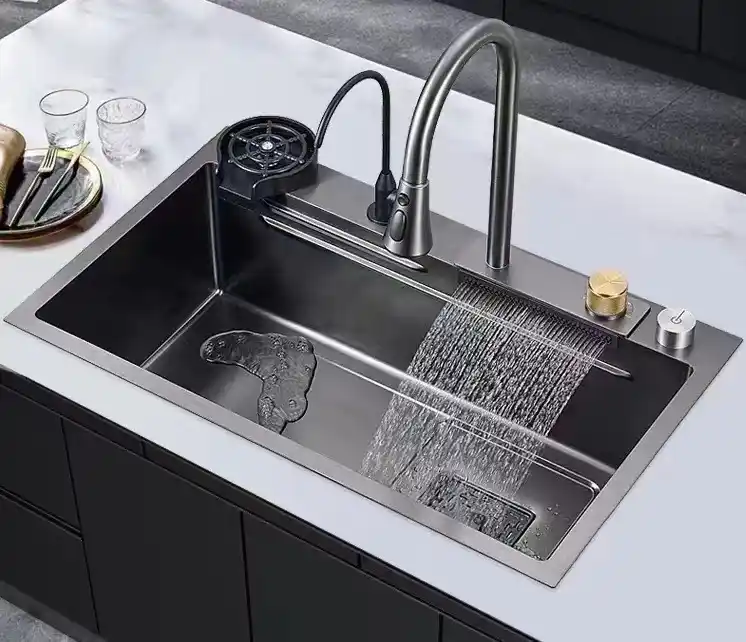
Granite sinks tend to disappear into daily life — which is exactly why they last so long in practice.
They don’t dent. They don’t ring. They don’t demand attention. When they’re replaced, it’s usually because the kitchen around them changed — often during a shift toward more integrated sink accessories.
In other words, the sink survives — the design doesn’t.
These sinks age beautifully… until they don’t.
A single chip near the rim or apron becomes impossible to ignore. A fine crack turns into a constant worry. The sink may still function perfectly, but psychologically, it’s done — especially when compared to modern apron sink designs that hide wear better.
This is why fireclay sinks often feel “suddenly old” even when they aren’t.
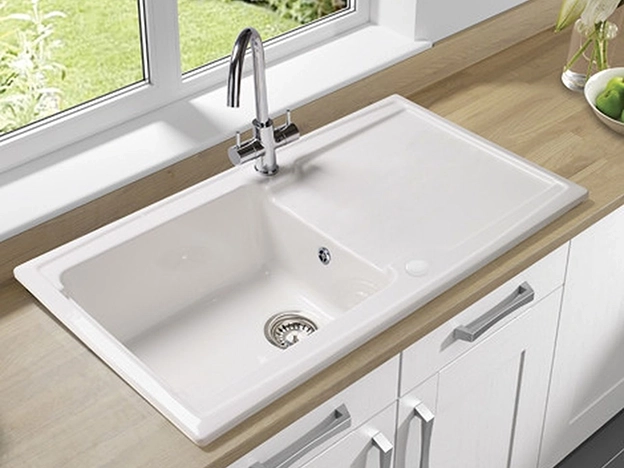
Cast iron sinks don’t complain. They endure.
But once the enamel breaks and rust starts creeping underneath, you’re no longer maintaining a sink — you’re delaying replacement.
Many people keep cast iron sinks longer than they should because they’ve “always been there.” That familiarity often masks damage that’s already spreading behind the cabinet walls.
Instead of asking “How old is my sink?”, ask this:
Is my sink protecting my kitchen — or slowly putting it at risk?
Leaks don’t always drip onto the floor. They seep into cabinets. They soften wood. They loosen mounting hardware. By the time the damage is visible, it’s already expensive.
This is why installers tend to replace sinks earlier than homeowners expect. They’ve seen what waiting too long costs.
If you:
The sink is already failing at its job.
Resealing once is maintenance. Resealing regularly is a warning.
Sealant failure often means movement, stress, or surface degradation — none of which improves with time.
This is the most honest test.
If you were designing the kitchen today and wouldn’t select this sink, keeping it usually costs more in daily friction than it saves financially.
If a repair solves the problem once and for good, it’s worth it.
If it becomes a cycle — reseal, adjust, tighten, repeat — replacement isn’t wasteful. It’s economical.
Sinks are cheap compared to cabinets, countertops, and water damage.
A kitchen sink lasts as long as it stays invisible.
The moment you start noticing it — its noise, its stains, its leaks, its limitations — its useful life is already ending, no matter what year it was installed.
The best replacement sinks don’t impress you. They don’t demand attention. They don’t make you careful.
They simply stop being part of your thinking — and that’s when you know you replaced it at the right time.