Redefine your kitchen experience
Our handmade sinks are created by experienced craftsmen, and each piece is a unique work of art.

Most people look at a kitchen sink and see a simple, solid object. Manufacturers see something very different: metal thickness trade-offs, tooling limits, stress points, sound control, welding scars, polishing passes, and dozens of small decisions that separate a “looks good in photos” sink from one that survives 15 years of real use.
This guide walks through how sinks are actually manufactured, step by step, without the marketing fluff. Whether you’re sourcing sinks, designing a kitchen, or just curious how a flat sheet of steel becomes the most used workstation in your home, this is the process behind it. For an overview of our manufacturing capabilities and sink collections, you can also visit our kitchen sink manufacturer homepage.
Before any shaping happens, manufacturers choose the base material, and this decision quietly determines 70% of the final sink’s performance.
For stainless steel sinks, manufacturers usually work with:
A thicker sheet:
Cheaper sinks often start thin and rely on coatings to mask weakness later.
Each material follows a different manufacturing path, but stainless steel remains the most process-intensive and precision-dependent.
Once material is selected, large stainless steel coils or sheets are cut into blanks.
Manufacturers typically use:
At this stage, tolerances matter. Even a 1–2 mm deviation can:
High-end factories inspect blanks immediately. Budget lines often don’t.
This is where sinks truly take shape.
Most sinks today are deep-drawn using hydraulic presses.
The metal blank is:
Deeper bowls require:
Thin steel pushed too deep = weak corners and future cracking.
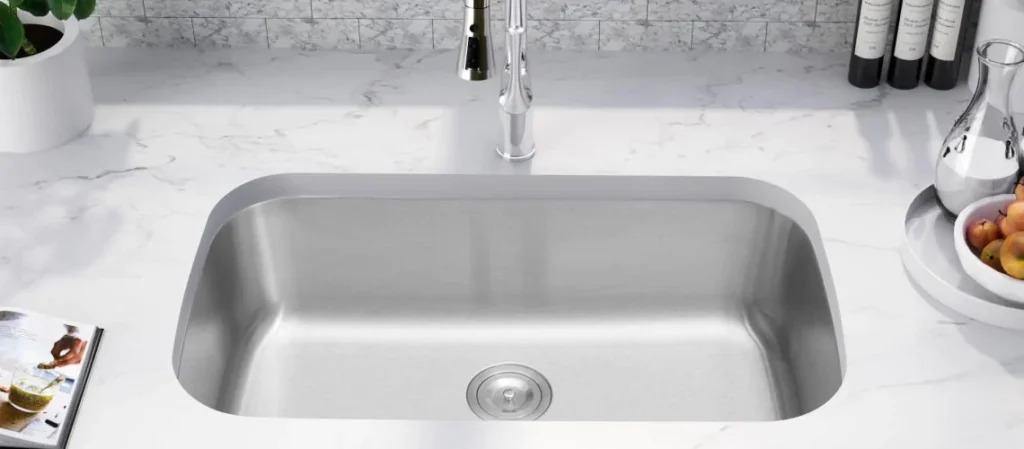
Premium sinks are often handmade:
This method allows:
Many modern handcrafted undermount stainless steel sinks are produced this way, but it requires skilled labor and strict quality control.
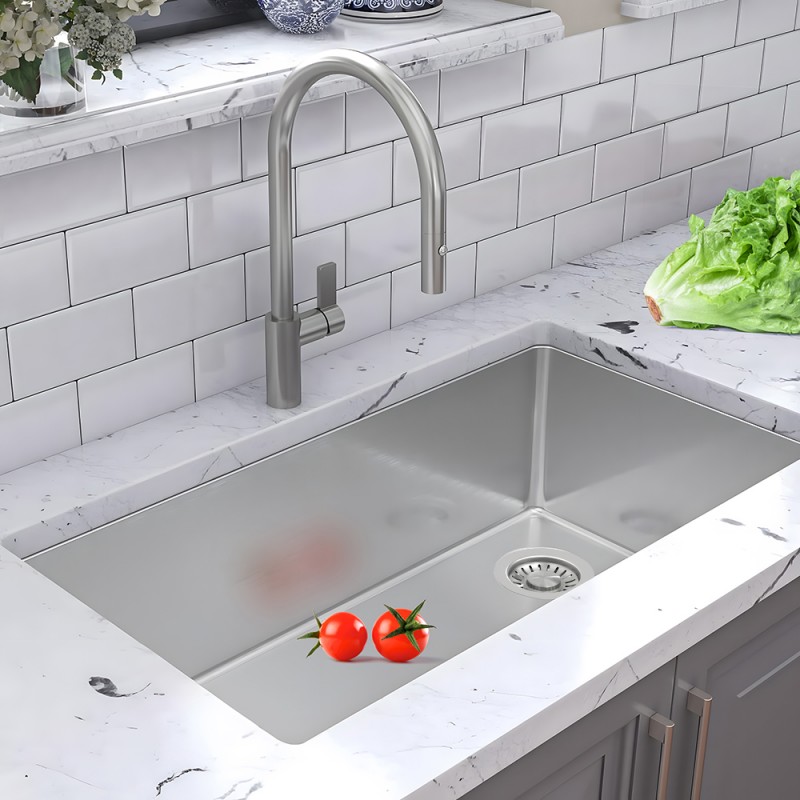
Forming steel creates internal stress.
Good manufacturers perform annealing:
Skipping this step saves money but leads to:
This is one of the most common shortcuts in low-cost sinks.
After shaping:
Precision here affects:
Poor punching creates micro-fractures that may rust later — even on “stainless” steel. This is especially critical for sinks designed to work with kitchen sink drains with dual filtration baskets.
For double bowls or handmade sinks:
Quality welding should be:
Cheap welding often hides flaws under heavy coating instead of proper metal blending, which can compromise long-term durability in designs like undermount double bowl stainless steel sinks.
This is where sinks gain their final appearance and durability.
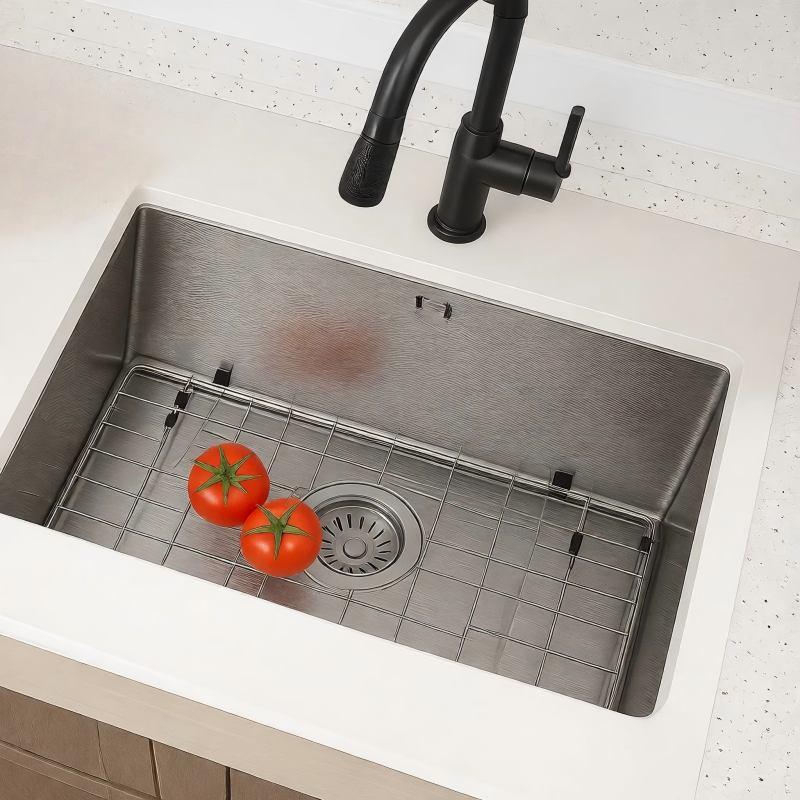
Finishing involves:
High-end sinks may receive manual finishing, while budget sinks rely on fast mechanical belts.
To reduce noise, manufacturers add:
Better sinks:
Poor coatings can peel, smell, or trap moisture against steel.
Serious manufacturers inspect for:
Lower-end factories often rely on random sampling, which means defects can slip into shipments unnoticed.
A well-made sink can still fail if poorly packed.
Professional packaging includes:
Damaged edges during transport are one of the most common hidden sink issues.
Two sinks may look identical online. But their manufacturing choices determine:
Most of these differences are invisible — until the sink is installed and used daily.
A sink isn’t just stamped steel or molded stone. It’s the result of hundreds of small manufacturing decisions, each one affecting durability, performance, and long-term satisfaction.
Understanding how sinks are manufactured doesn’t just help you choose better — it helps you recognize real quality beyond surface polish and marketing claims.
If you know the process, you can spot the difference immediately.