Redefine your kitchen experience
Our handmade sinks are created by experienced craftsmen, and each piece is a unique work of art.

A Plainspoken, Deep-Dive Guide From People Who Build Sinks For A Living
Pressed Sinks: The Traditional Approach
Pressed Sinks Are Stamped Quickly From Thin Sheets, Which Keeps Costs Down But Limits Options
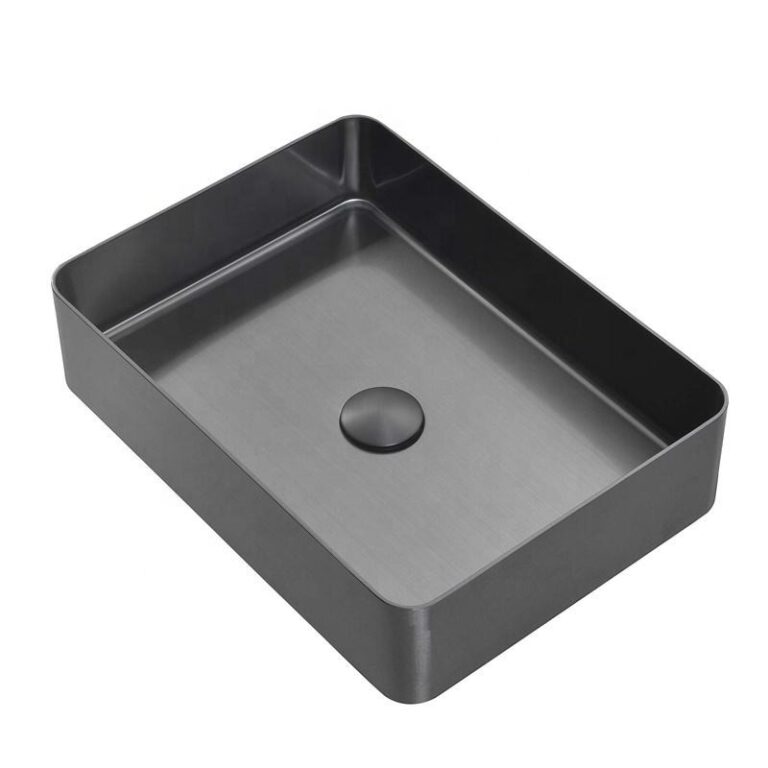
I’ve seen enough kitchens to know the look: a thin metal basin that served dutifully for years, then slowly bowed, rattled, or developed a stubborn dent. Pressed (or stamped) sinks are made by pressing a thin sheet of steel into a mold. It’s efficient, and for many applications it’s perfectly fine — but the process forces compromises: fixed geometry, rounded corners, and limited material thickness.
Handmade Sinks: Precision Craftsmanship
Handmade Sinks Are Cut, Formed, Welded, And Finished By Skilled Hands Working With Thicker Steel
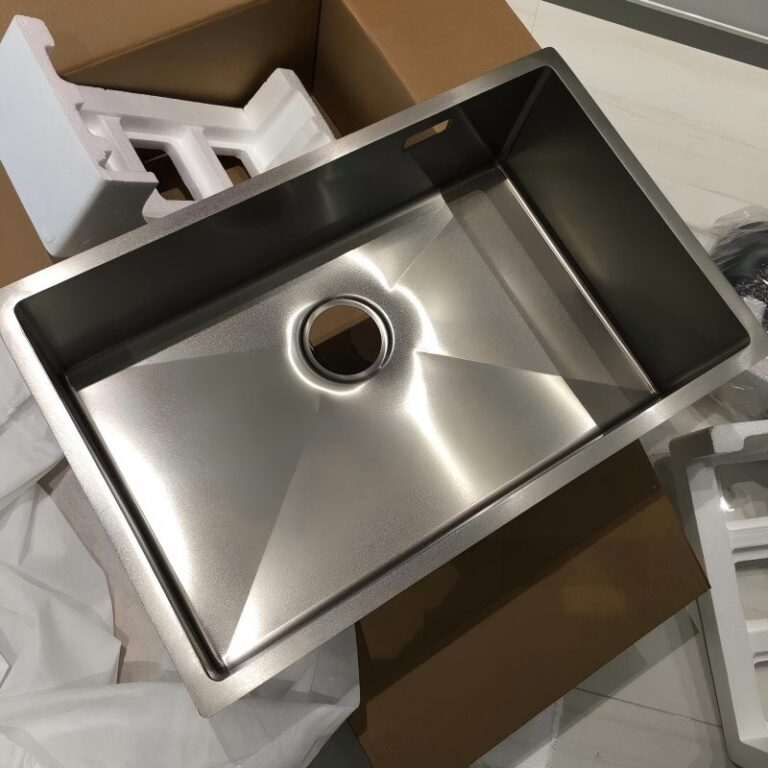
Handmade fabrication feels closer to carpentry than to an assembly line. Craftspeople cut heavier gauge sheet metal, form each panel, TIG-weld corners, grind the seams, and finish the surface. That extra time and attention changes everything: cleaner lines, stronger joints, and the ability to tailor depths, bowl sizes, and ledges to how you actually cook.
Material Thickness Makes A Difference
Thicker Steel Changes The Way A Sink Performs — You Can Hear And Feel The Difference
Pressing commonly uses sheets around 0.6–0.8 mm. Handmade sinks often start at roughly 1.0–1.5 mm. That’s not just a number: the heavier metal resists dents, doesn’t flex under heavy pots, and dampens sound. In a busy kitchen, a thicker sink feels solid when you set down a cast-iron pan; a thin sink sometimes feels like a drum.
Welded Corners Vs. Rounded Edges
Tight Corners Give You More Room; Good Welding Makes Them Hygienic
Rounded corners from pressing are easy to clean, yes — but they eat interior volume. When corners are welded correctly and finished smooth, you get near-square basins that fit baking sheets and full trays more comfortably. Modern passivation and finishing remove the old fear of “dirty seams”; well-finished welded corners are both sturdy and sanitary.
Design Flexibility
Handmade Sinks Let You Specify Depth, Bowl Layout, And Workstation Details That Match How You Cook
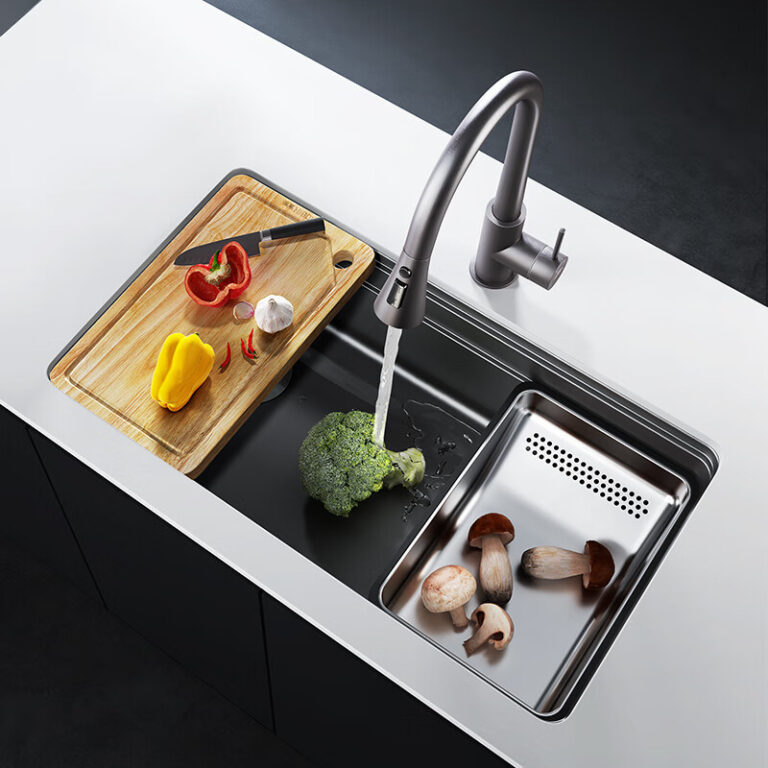
Do you bake a lot and need a single, uninterrupted bowl for sheet pans? Or do you want a deep wash basin with a shallower prep side? Handmade sinks are literally cut to those needs. You can add ledges for a sliding cutting board, a recessed drain shelf for utensils, or built-in trays that sit flush when not in use.
Mounting And Finish Options
Installation Style And Surface Treatment Are Part Of The Design, Not Afterthoughts
Undermount, top-mount, flush-mount — pick the installation that suits your counter and aesthetic. For finishes, beyond polished or brushed, you can opt for nano-coatings that repel fingerprints, or PVD layers for dramatic colors like matte black or warm gold. Those finishes change daily life — less wiping, fewer water spots, and a look that ages more gracefully.
The Aesthetic Advantage
A Sink Can Be The Kitchen’s Quiet Centerpiece
Handmade sinks read like an architectural object: crisp lines, proportioned depths, and edges that match stone or metal counters. They don’t shout luxury — they make everything else look sharper.
Market Trends Support The Shift
Design, Longevity, And A Taste For Real Craftsmanship Are Driving Demand
Open-plan homes, home chefs wanting commercial-level tools, and a consumer base tired of disposable goods are pushing higher-quality sinks into mainstream renovations. Commercial kitchens have been using custom metalwork for decades; now residential kitchens borrow those practical design cues.
Price Considerations
Higher Upfront Cost, But Lower Replacement And Better Long-Term Value
Yes — handmade sinks cost more up front. But because they resist damage and integrate with workstations, they often avoid replacement and downtime. In practice, that can mean fewer surprise expenses over a decade.
Maintenance Requirements
Simple Habits Keep Handmade Sinks Looking New
Handmade doesn’t mean finicky. Wipe-dry after use, avoid chlorine-based cleaners and steel wool, and use mild detergents. For special finishes, a light application of mineral oil or a manufacturer-recommended conditioning product every few months will maintain the look.
Availability And Lead Times
Customization Takes Time — But Smart Makers Offer Semi-Custom Fast Options
If you need fully custom geometry, expect a lead time measured in weeks. If you want a fast turnaround, many workshops now offer semi-custom lines: common widths and depths that can be configured quickly. The custom wait is shrinking as makers scale their processes.
Durability, Custom Fit, And Hygiene Add Up Under Heavy Use
In a restaurant, a dented or noisy sink slows staff and costs money. Handmade sinks stand up to constant use, integrate into prep lines, and can be specified to fit equipment and workflows precisely. Those are not luxury perks in a commercial setting — they’re operating efficiencies.
Sustainability Considerations
A Long-Lived Sink Is An Environmentally Friendly Sink
Stainless steel is highly recyclable; a sink that lasts decades removes the need for repeated replacements and the waste that creates. Some manufacturers also use recycled stainless and more energy-efficient fabrication methods, which reduces the product’s footprint.
Integration, Workstations, And Quiet Intelligence Are Next
Expect sinks to become modular hubs: pop-in cutting boards, hidden drain trays, improved sound insulation, and even sensor-ready rims for auto-fill or automatic waste systems. Handmade construction lets these elements marry form and function cleanly — no awkward retrofits.
A Short Checklist To Help You Decide
If You Value Long-Term Performance, Tailored Fit, And A Sink That Supports How You Work In The Kitchen — Handmade Will Often Be The Better Fit.
A Local Bistro Switched From Pressed To Handmade Basins After Replacing Cracked, Rattly Sinks Twice In Two Years. Three Things Happened: the staff noticed less noise during prep, trays fit without lifting, and they stopped factoring sink replacement into operating budgets. After the switch, the owner called the sink “one less thing to worry about” — a phrase every restaurateur understands.
Daily: Rinse And Wipe Dry.
Weekly: Clean With Mild Detergent; Rinse Thoroughly.
Monthly: Inspect Underside For Sound Pads; Recondition PVD/Nano Finishes As Recommended.
Annually: Have The Installer Check Seams And Reapply Any Protective Coatings If Needed.
We Build Sinks That Earn Their Place In The Kitchen
We treat sinks like tools that deserve good design: thoughtful depth, firm walls, and finishing touches that reduce chores. If you want practicality that looks considered, we make that kind of sink.
Handmade Sinks Are A Practical Investment, Not Just A Trend
They cost more up front, but they offer tangible daily benefits: better fit for how you work, quieter and firmer performance, and a lifespan that cuts waste. For homeowners and pros who care about how a kitchen feels and functions, a handmade sink stops being a detail and becomes a tool that earns its keep.