Short answer up front: no — you don’t need a draining board. But before you toss the idea, give me two minutes: this little slab of countertop does more than catch water. It quietly changes how your kitchen feels and how you move through small, repetitive tasks. That’s worth thinking about.
The ordinary miracle nobody notices
We hardly notice domestic inventions that work. The draining board is one of them. It’s not glamorous. It doesn’t spark joy. And yet, if you’ve ever lived without it, you know the tiny annoyances it removes: damp rings that never quite dry, a towel that smells because it lives by the sink, a mug left mid-drip while you search for a drying towel.
A draining board is simply a place for wet things to live until they’re dry. That sounds small — because it is — but many small conveniences add up to a better day. This is why many homeowners start paying closer attention to sink layouts when browsing options on the JSD Sinks homepage .
How a draining board actually changes routines
Think about the little loop: rinse → drain → dry → put away. Multiply that by breakfasts, lunches, dinners, tea breaks, and dishes across a week. If your sink has a proper place where water goes back into the bowl, every step becomes one motion instead of three.
Here are the real, human benefits you’ll notice:
Fewer countertop puddles and fewer moments of “ugh, wipe that up.”
Less towel laundry because you’re air-drying, not towel-drying.
Reduced stress: when wet things have a ‘home’, you stop making tiny decisions about where to set things down. Decision fatigue is real — even in the kitchen.
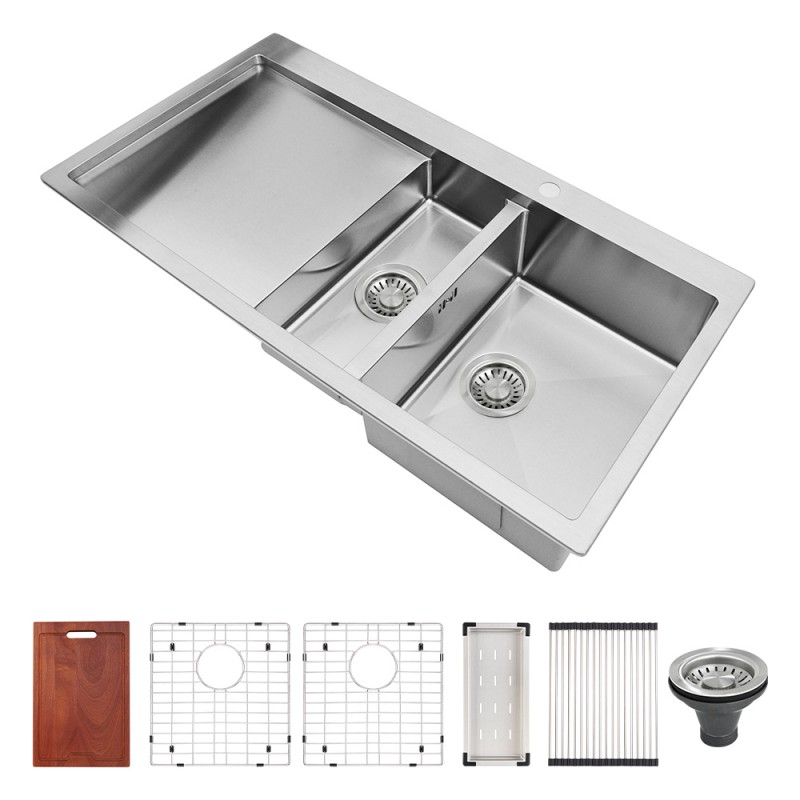
These benefits are especially noticeable in setups designed as workstation sinks that intentionally manage water flow and surface use .
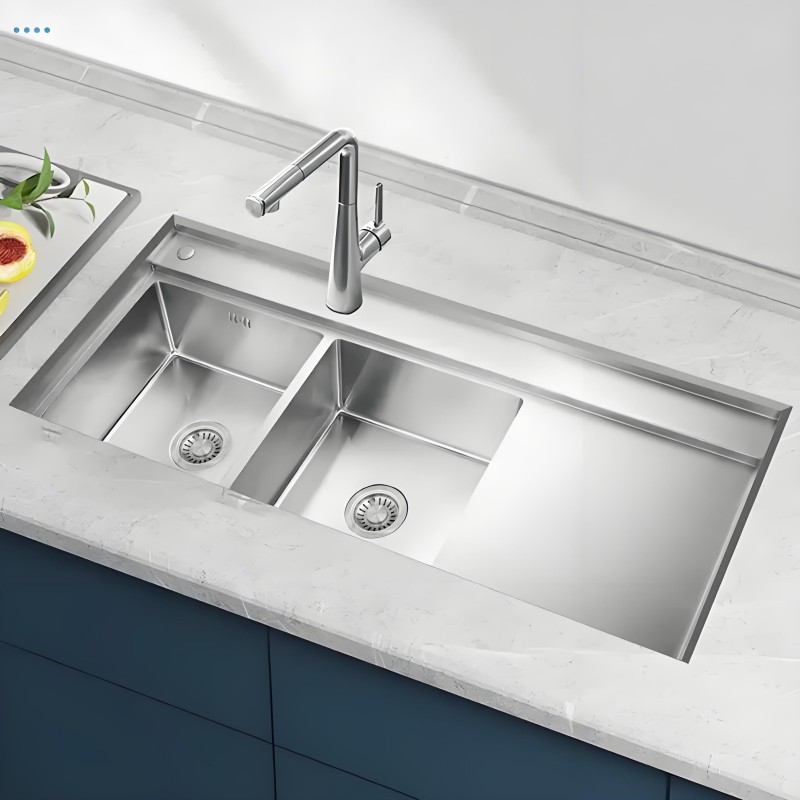
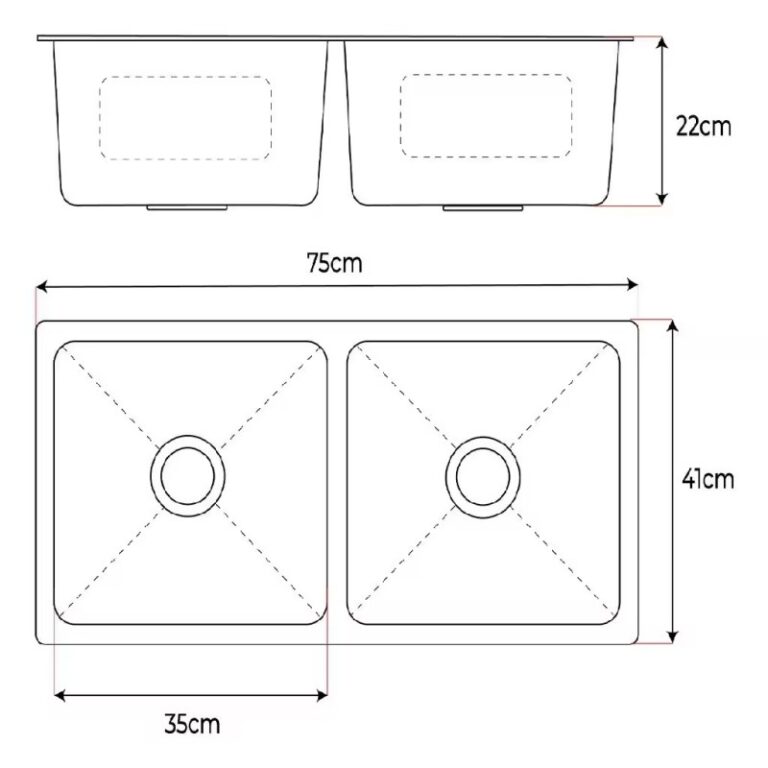
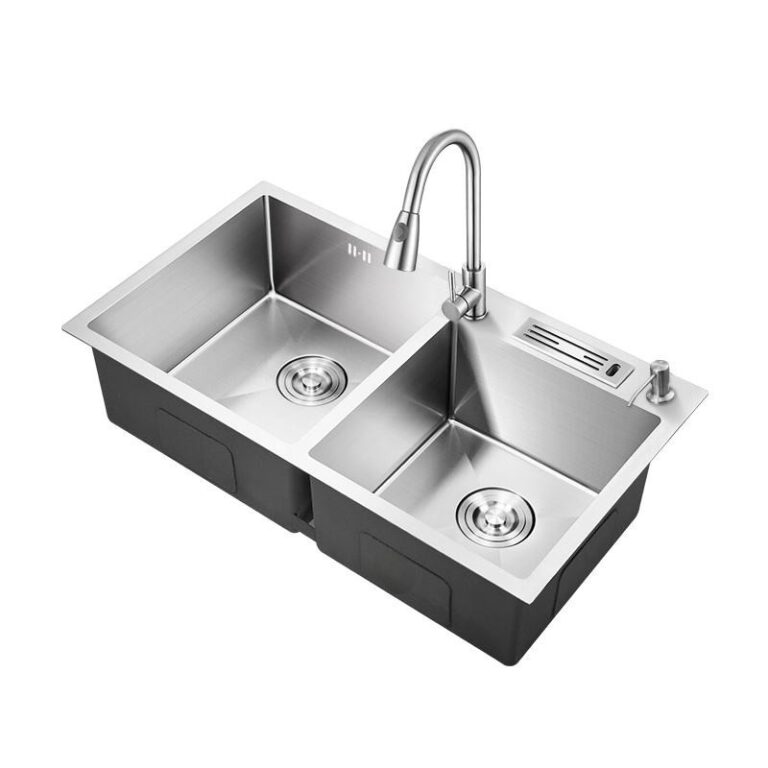
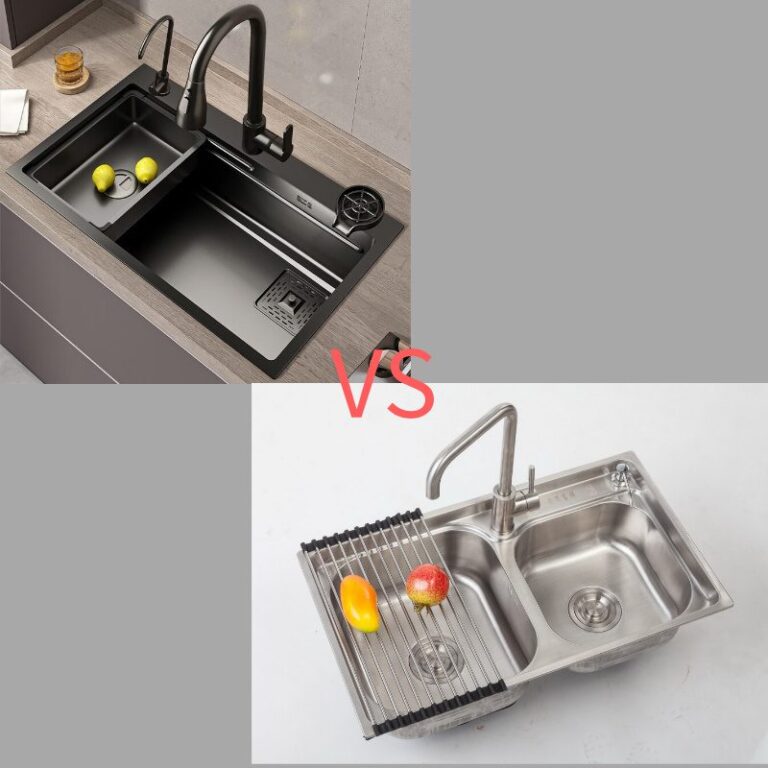
double drainboard sink
When a draining board might be overkill
Not everyone benefits. Skip or downsize the idea if:
You run a dishwasher and rarely hand-wash.
Your counters are so tiny every centimeter is sacred.
You love a minimalist look and prefer a stashed-away collapsible rack. If you’re in a tiny flat and the draining board would occupy precious prep space, it may be smarter to go portable.
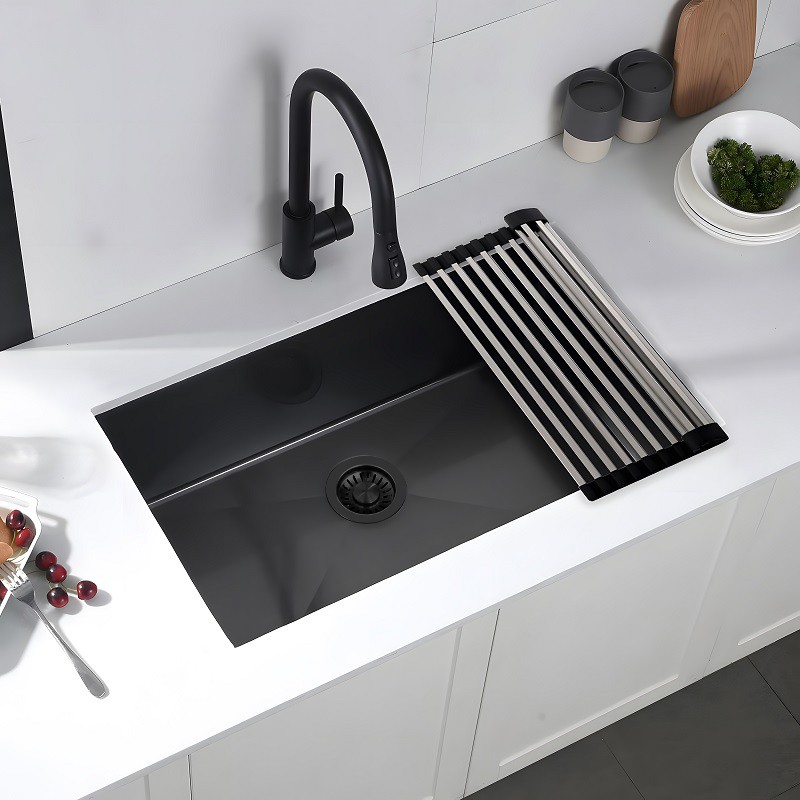
In compact kitchens, people often lean toward slimmer undermount sink designs to preserve uninterrupted countertop space .
undermount black sink
What makes a draining board good — and what makes it awful
A draining board is only as smart as its details. I’ve seen beautiful boards that became mistakes because one crucial thing was ignored: slope.
Do this:
Make sure it slopes so water runs to the sink. Test it with a cup of water before you commit.
Choose grooves that are easy to clean (shallow and wide beats deep and narrow).
Pick materials you can live with: stainless for durability, sealed composite for a seamless look, silicone mats if you want something rollable.
Avoid:
Flat stone that holds puddles. Pretty is useless if it pools water and grows mildew.
If you’re curious but cautious, test the habit before you spend on custom stone:
Get a roll-up silicone mat and use it for a month. Keep a note: do you leave it out or stash it nightly?
Try an over-sink rack for two weeks. Does it become part of the counter choreography?
Use a small removable drip tray for a while — it’s cheap and reversible.
Real behavior trumps design theory. If a cheap mat becomes indispensable, a built-in board is probably worth it — especially when paired with practical kitchen sink accessories designed for drainage and workflow .
Double Kitchen Sink with Drainboard
Alternatives that work (especially for small kitchens)
Over-sink racks: great for saving counter space and they use vertical air.
Collapsible dish racks: open when needed, tuck away when not.
In-sink drainer: sits partly in the bowl and drains straight into the plumbing — compact and neat.
Hidden under-sink trays: these are clever if you want zero visual clutter but still want the function.
A freelance writer in a studio flat found a roll-up mat and, after two months, decided to reinstall a slim integrated stainless strip when she redid her countertop. She used it daily and hated hauling the mat in and out.
A family of five chose a full-width draining board during a kitchen renovation. The kids learned that wet cups go in the same place — one fewer “where did you leave that cup?” confrontation per week.
A couple installed a gorgeous stone board with inadequate slope. It pooled and became a maintenance nightmare. They eventually had to rework it — expensive lesson: test the slope.
Accessibility, hygiene, and the small green gains
Accessibility: a draining board keeps items at one height and in one place — useful for people who have limited mobility or bad backs.
Hygiene: air-drying on a board beats a damp towel in terms of bacteria growth.
Sustainability: air-drying reduces towels and laundry loads. That’s a small, steady win for water, electricity, and detergent use.
Installation and maintenance — practical tips
During installation, pour a cup of water on the board to check the slope. It should go to the sink, not sit.
For stone or composite, follow sealing instructions. Porous materials trap odors if not sealed.
Clean grooves weekly with a soft brush. Vinegar and warm water work well on soap scum.
If you choose stainless, don’t use steel wool — a soft pad and a mild cleaner are enough.
Cost vs. payoff — how to think about it
If you rent, cheap and portable is usually enough. If you plan to stay in a place or are doing a full kitchen reno, a well-made integrated draining board is a small luxury that pays back through time saved, less maintenance, and fewer “little” annoyances. Think of it as a behavior-improvement tool, not just a countertop feature.
Renovating soon? → design it into the countertop now.
Want to test? → start with a silicone mat or over-sink rack for a month.
Final thought — what you’re really buying
A draining board isn’t status. It’s ergonomics for everyday life. It doesn’t transform your kitchen into a showhome, but it does transform how you feel about small chores. And those small feelings make the difference between a kitchen that’s merely functional and one that’s quietly, daily pleasant.