Redefine your kitchen experience
Our handmade sinks are created by experienced craftsmen, and each piece is a unique work of art.

Most people think this question is about looks. It isn’t. It’s about how much patience you have, how precise your countertop work really is, and whether you want flexibility later—or perfection now.
On paper, the difference between a top mount sink and a flush mount sink sounds simple. One sits on top of the counter. The other sits level with it. But once you live with either choice, the difference shows up in small, annoying, everyday ways. The kind of ways you don’t see in product photos.
Let’s talk about those.
A top mount sink (often called a drop-in sink) is the one most people grew up with. There’s a visible rim. You see where the sink ends and the countertop begins. No mystery.
What that rim really does is buy you margin for error.
If the countertop cut isn’t perfect, the rim hides it. If the cabinet underneath shifts slightly over time, no one notices. If you replace the sink ten years later, the countertop usually survives the process.
That’s why top mount sinks are everywhere in rentals, older homes, and budget-conscious remodels. Not because they’re cheap—but because they’re forgiving. You’ll see this clearly across many classic top mount sink designs still being used today.
Living with one feels… normal. You wipe around the edge when you clean. Occasionally, water sits where the rim meets the counter. It’s not dramatic. It’s just part of the routine.
People who regret choosing a top mount usually don’t regret it because it failed them. They regret it because they wanted the kitchen to feel more “custom” than it does.
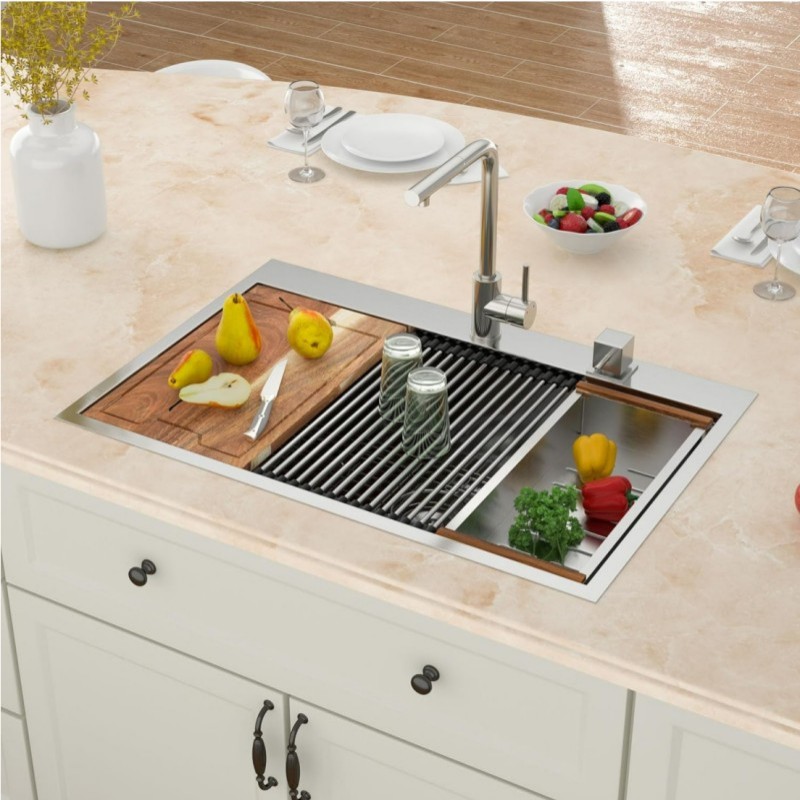
A flush mount sink is a different mindset.
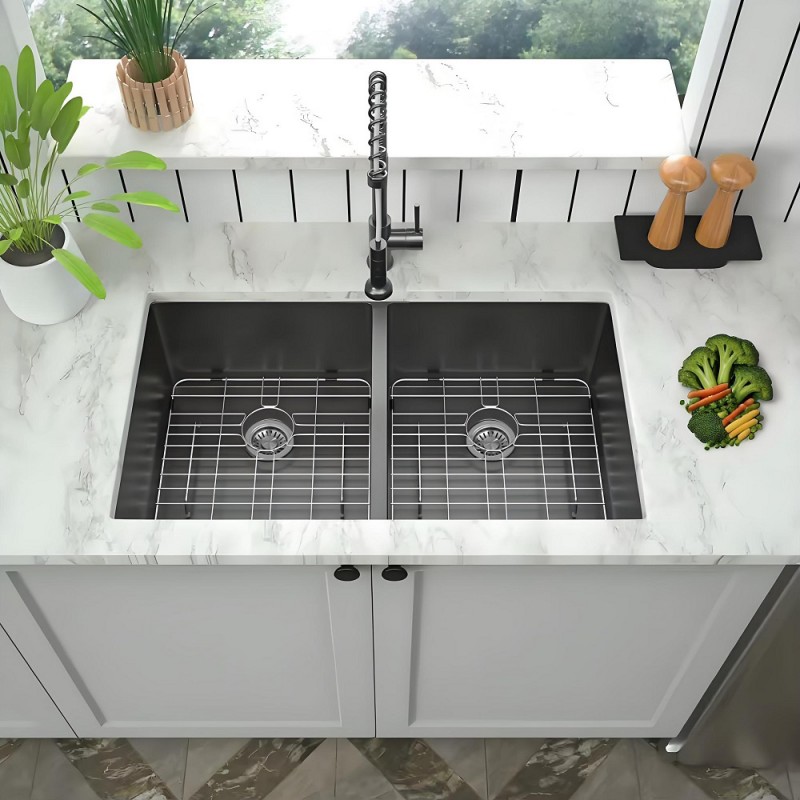
Here, the sink rim sits exactly level with the countertop surface. No lip. No overlap. Just one continuous plane. When it’s done well, it looks effortless. Like the sink was always part of the counter — a feeling you often get from a properly made seamless flush mount kitchen sink.
And when it’s done badly? You see it every single day.
Flush mounting requires precision. Real precision. Not “close enough” precision. If the countertop edge isn’t routed cleanly, the seam looks uneven. If the sink isn’t perfectly level, water pools. If the sealant line is sloppy, it ruins the illusion.
This is the part people don’t hear enough: a flush mount sink only looks expensive if the craftsmanship is excellent.
Living with a good flush mount sink is genuinely satisfying. You sweep crumbs straight into the basin. There’s nothing to catch, nothing to interrupt your movement. It feels intentional. Calm. Finished.
Living with a bad one is the opposite. You notice the seam. You wonder if water is getting underneath. You hesitate before scrubbing too hard near the edge.
Flush mount sinks reward care—and punish shortcuts.
Here’s the truth most articles avoid: Your sink choice should be decided after your countertop material, not before.
Laminate countertops and flush mounting do not get along. Laminate simply doesn’t tolerate the kind of routing and sealing required long-term. You can try, but you’re betting against physics.
Solid surface countertops? Excellent for flush mounts. Quartz and stone? Possible, but only with an experienced fabricator. Tile? Usually not worth the headache.
If your countertop installer hesitates when you say “flush mount,” listen to that hesitation. That pause costs less than fixing a mistake later — something manufacturers who work closely with installers, like those behind JSD Sinks, understand very well.
Here’s a question people rarely ask themselves during a remodel:
“What happens if I hate this sink in five years?”
With a top mount sink, the answer is simple. You replace it.
With a flush mount sink, the answer is complicated. You may need countertop work. You may need the same sink dimensions. You may discover that the model you chose is discontinued.
Flush mount sinks assume commitment. Top mounts assume change.
Neither is wrong. But pretending they’re equal is.
Choose a top mount sink if:
Choose a flush mount sink if:
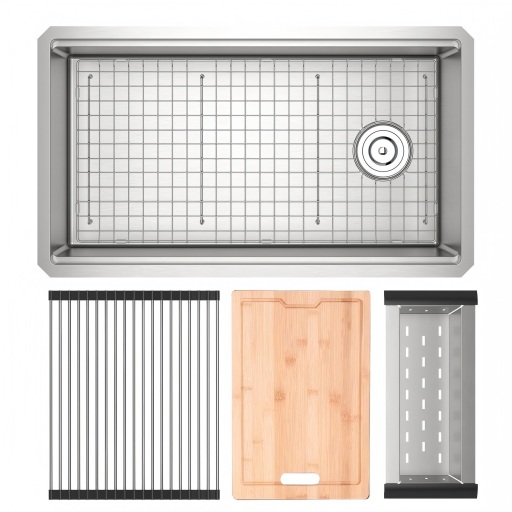
Many homeowners pairing flush or top mount sinks with integrated features also explore options like a workstation sink to maximize daily usability.
A top mount sink disappears into your routine. A flush mount sink becomes part of your design identity.
Neither choice makes your kitchen better on its own. What matters is whether the choice matches how your kitchen is actually used—and how much imperfection you’re willing to tolerate.
If you choose a flush mount to impress guests but your installer cuts corners, you’ll notice it long after the compliments stop. If you choose a top mount for simplicity, you may never think about it again—and that’s not a failure. That’s success.
Thoughtful accessories can also shape that experience more than people expect, especially when paired correctly with the sink itself — something worth exploring in a well-designed sink accessories setup.
There is no “better” sink. There is only a better match.
Match the sink to the countertop. Match the installation to the skill level. Match the choice to how long you plan to live with it.
Do that, and the sink will stop being something you think about—and start being something that simply works.