Redefine your kitchen experience
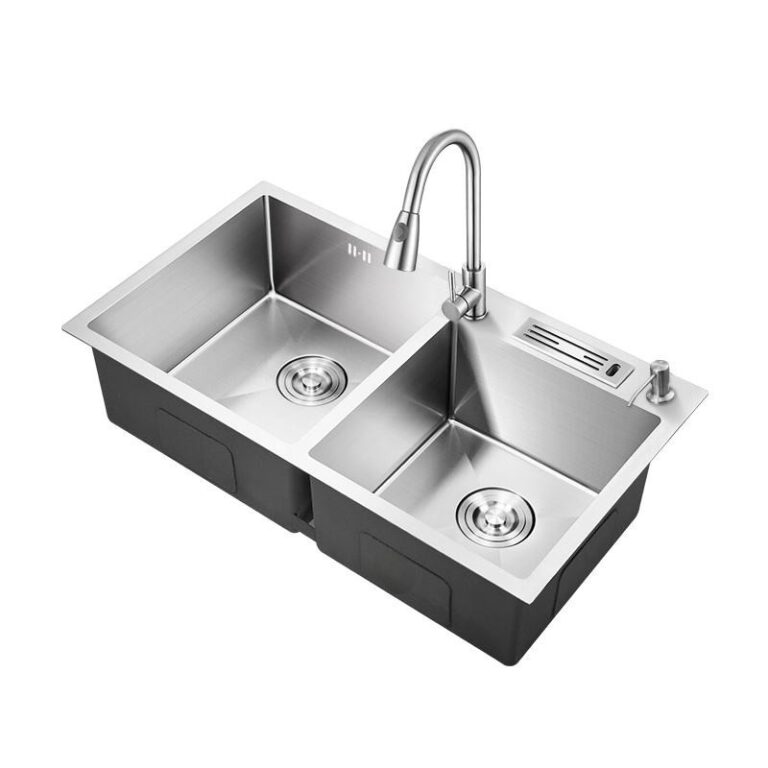
Our handmade sinks are created by experienced craftsmen, and each piece is a unique work of art.

Real talk about beauty, mistakes, upkeep and the one question that decides everything: will this sink feel like a handcrafted heirloom — or like an expensive headache?
Intro — why this matters more than you think
When you pick a sink, you’re not just choosing a hole in your counter that drains water. You’re picking a surface you’ll touch hundreds of times a week, a tone that sets the room, and a small ecosystem of care, repair and installation. “Handmade” promises character, human skill, and a story. It also brings unpredictability, custom fit issues, and sometimes a higher maintenance price tag. So — are handmade sinks good or bad? The honest answer: it depends. Here’s how to tell which depends on you.
Not all handmade is made equal — and the differences change everything.
“Handmade” ranges from a potter shaping a fireclay bowl in a neighborhood studio to a metalworker bending a single stainless sink by hand in a small shop — and both are valid, but radically different products. Handmade can mean:
Why it matters: each process has technical limits and maintenance realities. A hand-thrown fireclay sink behaves differently from a hand-hammered copper bowl — and your daily life will tell you which is better.
Small decisions add up: edge radiuses, rim thickness, the way an overflow is finished.
When a skilled maker knows their material, they can solve practical problems elegantly. I’ve seen a metalworker slightly alter a bowl’s lip so dishes don’t catch; a potter add more clay to the base to prevent hairline cracks; a concrete maker add a specific sealer that kept stains out for years. These are the tiny, invisible details that make a sink feel thoughtful — something often lost in mass production, even when comparing to well-designed workstation sinks.
But craftsmanship is not a guarantee. It’s a variable. The upside of true skill: repairability (they usually answer the phone), personal accountability, and finishes that age well because they were considered in the first place. The downside: if the maker’s process is sloppy, you can end up paying more for a worse product.
Love doesn’t add strength. Material science does.
Rule of thumb: ask for the technical specs (thickness, firing temp, sealer type). If a maker shrugs, walk away.
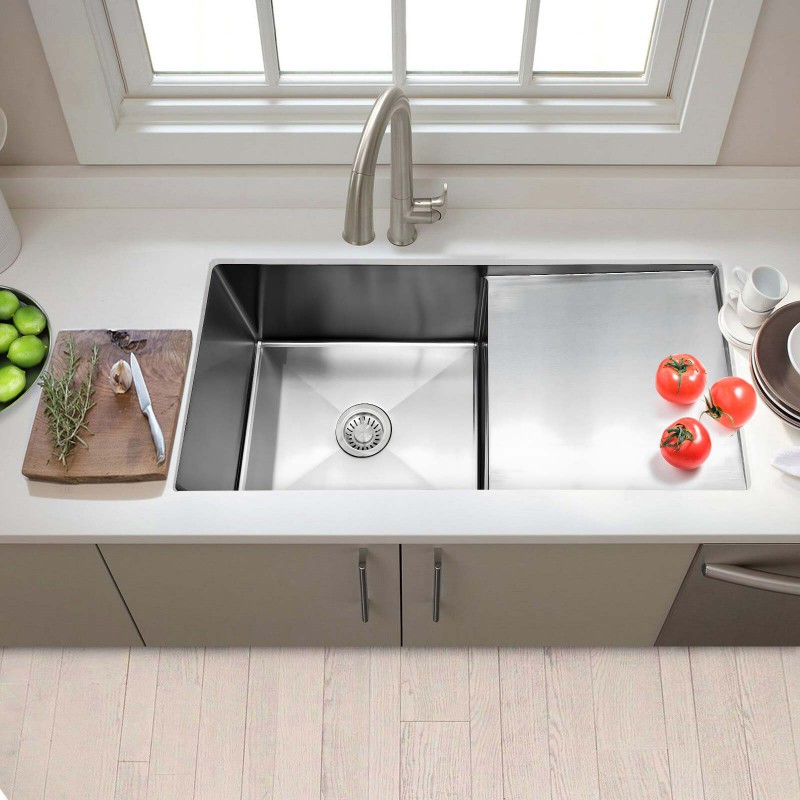
A few true stories so you know what “long term” actually looks like.
Takeaway: longevity is about material, process, and user behavior. Make sure those three line up.
Why small irregularities can feel luxurious — or sloppy.
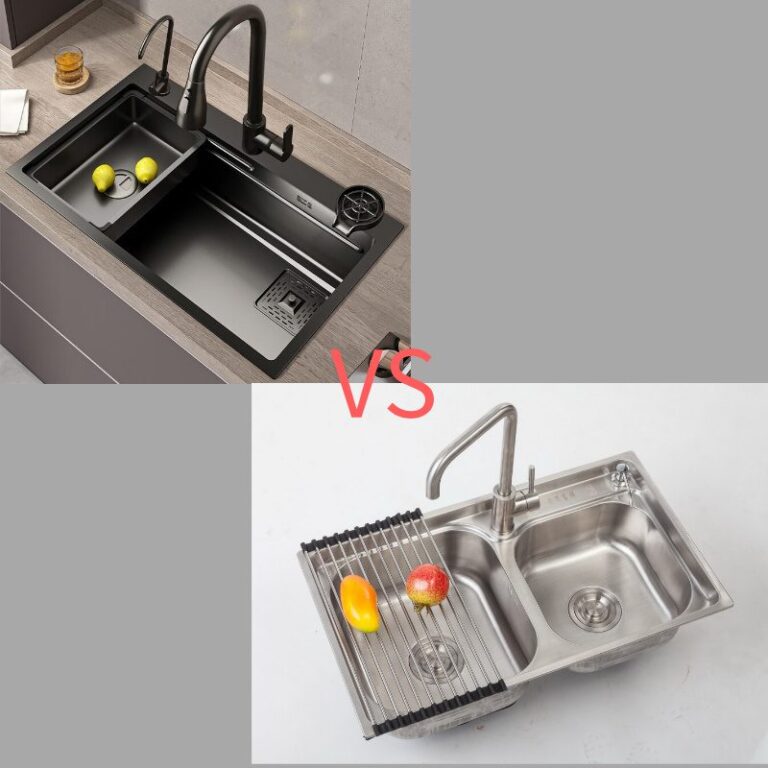
Humans respond to small imperfections. A slightly uneven hammered pattern or a hand-rubbed lustre tells your brain “someone made this with care.” That warmth is why many designers prefer handmade. But if you want clinical uniformity — a hotel bathroom look — mass-produced options like modern stainless steel sinks might actually be better. Be honest about what you want.
You’re paying for labor, scarcity, and customization — not only materials.
Handmade sinks will usually cost more because of labor, time, and often smaller material runs. A realistic way to look at it:
Numbers vary wildly by country and maker; don’t be seduced by “handmade” markdowns — check gauge, firing temps, sealer types, and warranty.
The ethical case for small batches and local makers is real — but not automatic.
Handmade pieces often use local materials, lower-production waste, and pay local labor. But some artisans may use toxic glazes or non-responsibly sourced stone. Ask about sourcing, glazing materials and whether the maker offers repair services — repairability is a big sustainability win.
This is where beautiful sinks become a plumbing headache — unless planned.
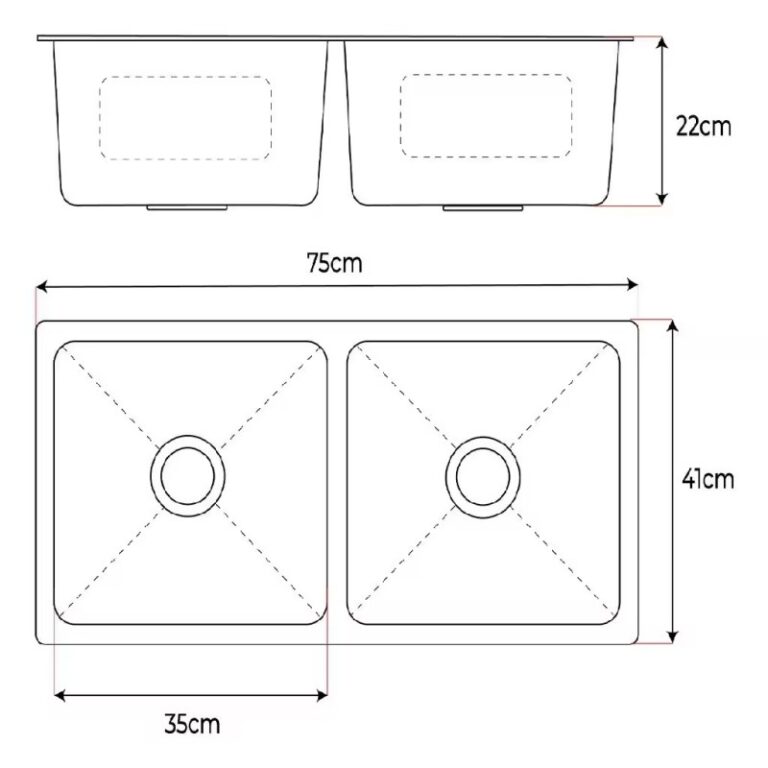
Handmade often means non-standard dimensions, heavier weight, and bespoke overflow placement. Plan for:
If the maker doesn’t provide a cut-out template and installation instructions, that’s a red flag.
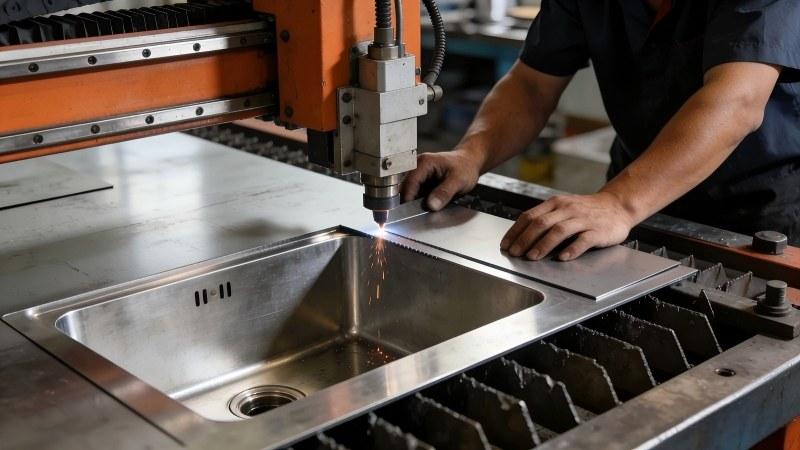
Practical red flags to look for when vetting a handmade sink.
If any of these show up, ask for proof or walk away.
Questions that separate confident makers from the rest.
If they answer directly, that’s a good sign.
Concrete examples to help you decide.
Handmade sinks are neither categorically “good” nor “bad.” They are right or wrong for a given person, place and practice.
If you value craft, uniqueness, and are willing to ask tough questions about materials and care, handmade can be a brilliant choice. If you need low-cost, zero-maintenance, and perfect repeatability, mass-produced is safer. The deciding factor is research: ask the practical questions, inspect real installations, and match the sink to how you live.