Abstract — why sink shape matters more than you think
A kitchen sink is equal parts tool and punctuation: it clears the mess, anchors the workflow, and finishes the room visually. Choosing a sink shape isn’t just an aesthetic tick-box — it changes how you prep, wash, load the dishwasher, bathe a baby (yes, really), and keep hygiene under control. This guide dives beyond the usual list of shapes to explain ergonomics, workflow rules, material interactions, maintenance trade-offs, and real-life use cases so you can pick a sink that actually makes your kitchen easier to live in.
1. Single sink — the efficiency choice for small apartments and minimalists
What it is: One uninterrupted basin, available in many sizes and depths.
Why people pick it: Maximum usable volume, easier to soak oversized pans, and fewer seams for bacteria to hide in. Single bowls simplify installation in tight cabinets and are the natural choice for one-person households or compact kitchens.
Practical tradeoffs
- Pros: largest single usable area, simpler plumbing, cheaper in many cases.
- Cons: no separation for washing vs rinsing (so you may need a large cutting board or rinse basket), less convenient when you want a dedicated prep/clean zone.
Design tips
- If you cook a lot or own big cookware, go deeper (9–10″) and consider a tight-radius stainless option for a modern look while keeping cleaning manageable. Tight/zero radius choices affect how sharp the interior corners are and how easy they are to keep spotless.
2. Double sink — a hygienic revolution for separated workflows
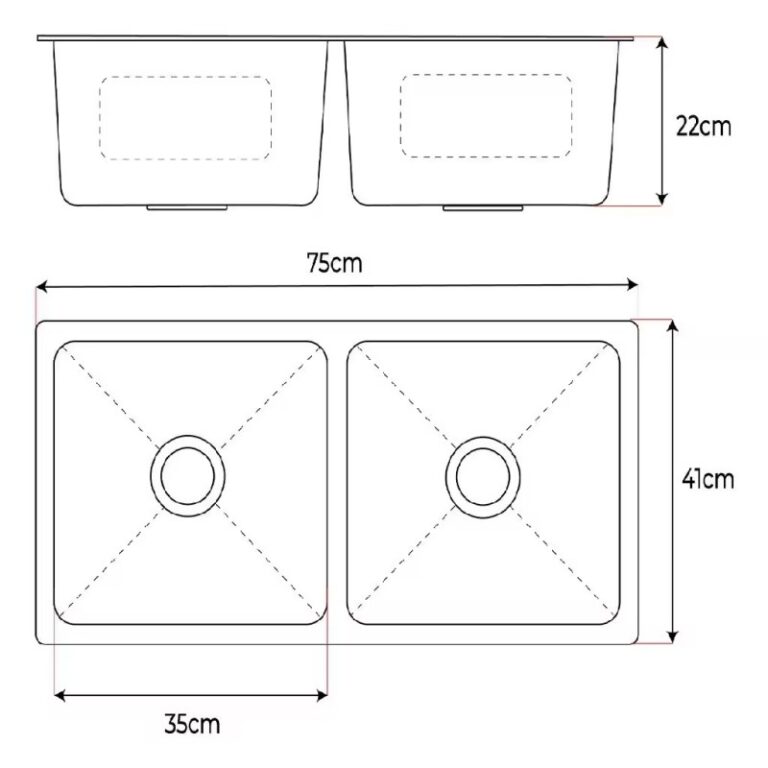
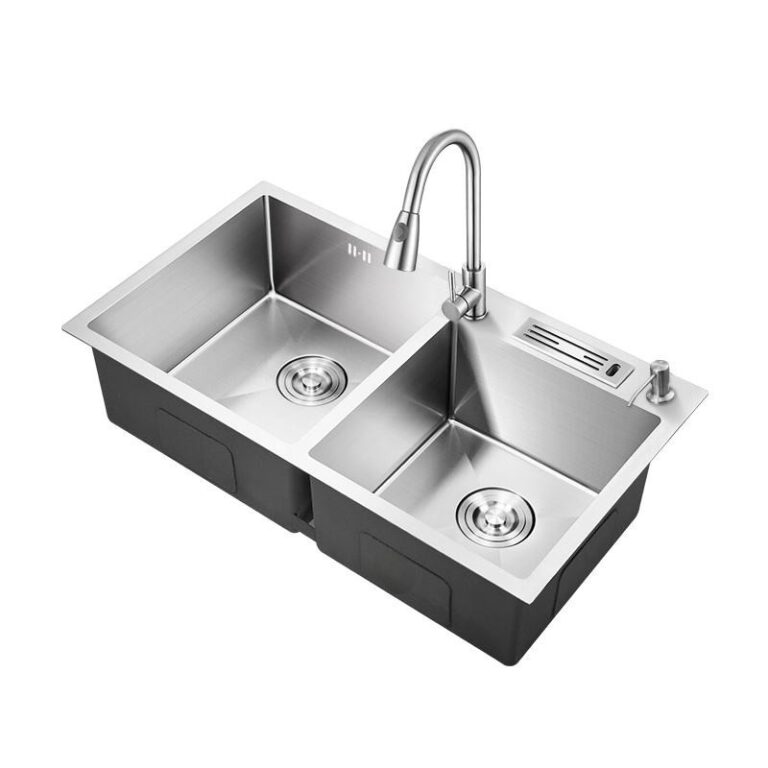
What it is: Two basins — either equal or with one larger than the other.
Why it works: Splits tasks (prep vs. wash), or segregates “clean” and “dirty” workflows — a design approach that’s especially useful in busy households or in kitchens where Chinese and Western cooking styles coexist and require strict separation of raw/clean items. The double basin supports simultaneous cooks and helps contain splash/odor when soaking.
Practical tradeoffs
- Pros: multitasking, better separation for hygiene, more organized.
- Cons: smaller single-basin capacity, can make washing large pans awkward unless one basin is oversized.
Design tips
- Choose an 80/20 or 60/40 split if you want a primary basin for pots and a secondary for prep. Fit one basin with a colander insert so the smaller side becomes a true prep station.
3. Special-shaped sinks — the face value of personalized kitchens
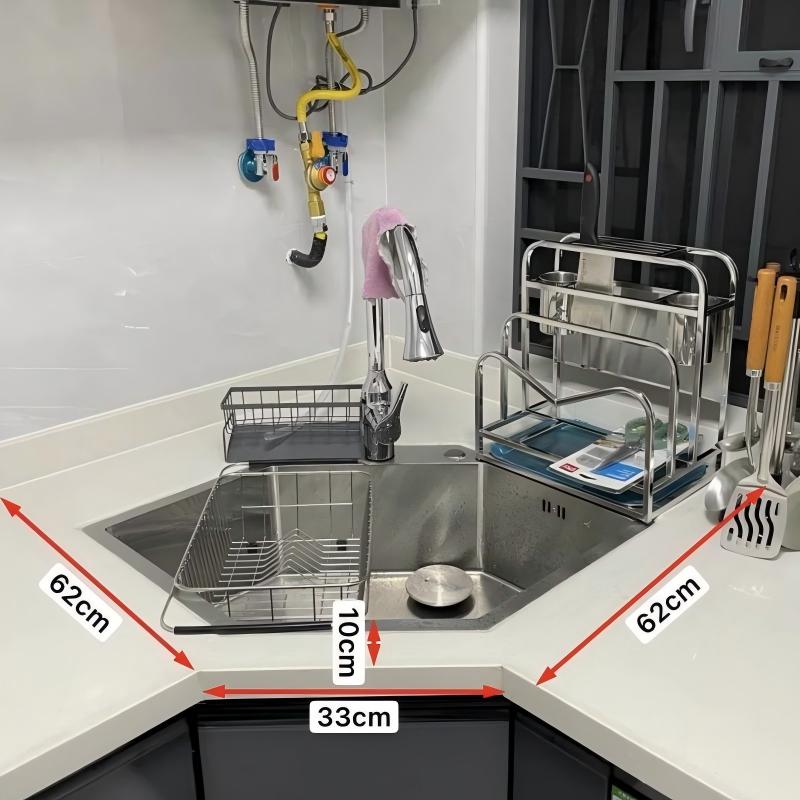
What it is: Asymmetric basins, integrated workstations, corner sinks, or sinks with a custom profile.
Why they’re popular: They let you solve awkward layouts (corner runs, peninsula islands) while adding personality. Integrated ledges, drainboards, and stepped shelves turn the sink into a multifunctional appliance — more useful than a pure decorative novelty when designed well.
Practical tradeoffs
- Pros: excellent when you need tailored function (e.g., a corner sink to free up linear countertop), can improve ergonomics if the shape matches your tasks.
- Cons: custom shapes can be more expensive, need precise cabinet and plumbing coordination, and may reduce usable large-dish space.
Design tips
- If you pick a special shape, mock up movement with tape on the counter: ensure there’s a dry landing space next to the main basin and that the dishwasher door can open unobstructed.
4. Mother-and-child sinks — multifunctional integrated large-kitchen solution
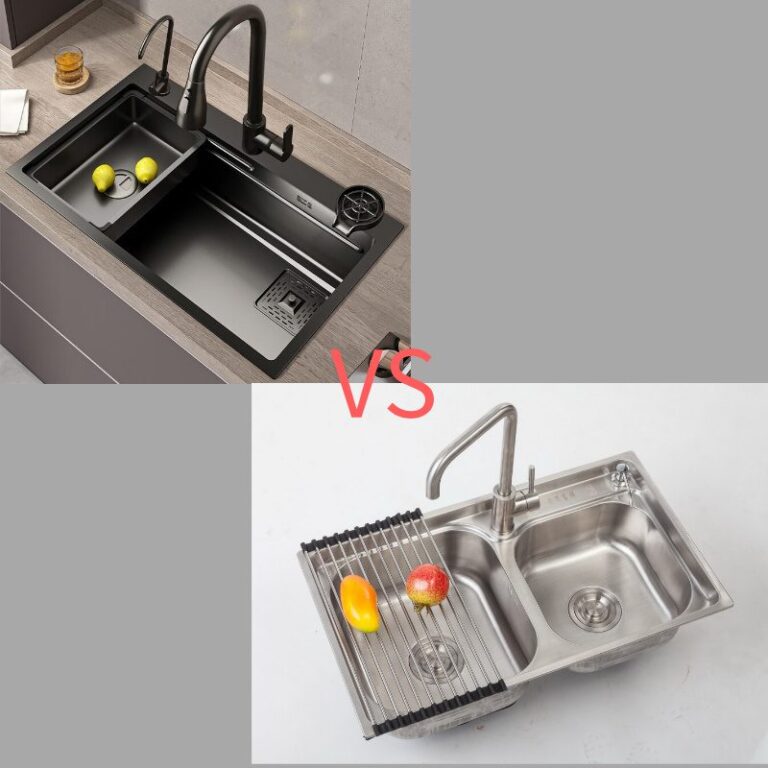
What it is: A large main basin paired with a smaller, shallower secondary basin — purposefully designed for multi-tasking (rinsing herbs, rinsing a baby, food prep) while keeping the main basin free for large cookware. This format is gaining traction where homeowners want a “mini-workbench” attached to the main sink.
Why they shine
- They combine the best of single and double sinks: big volume when you need it, a dedicated secondary zone for delicate or quick tasks. For families, it’s practical: shallow child basin for quick hand/face washing or washing produce without losing depth for pots.
Design tips
- Consider accessories designed for the smaller basin — cutting boards, fitted colanders, or a shallow draining tray that slides over the mini basin to create a continuous prep surface.
5. Round / elliptical sinks — an artistic expression for open kitchens
What it is: Circular or oval basins that break the angular language of counters and cabinets. Often used in islands or bar areas for a softer look.
Why pick one: They become a design focal point and reduce sharp corners in busy, open layouts. Round bowls also can be surprisingly ergonomic for hand-washing smaller items.
Practical tradeoffs
- Pros: distinctive look, easy to integrate with curved counters, often deeper for their footprint.
- Cons: less surface area for rectangular pots and baking sheets, and fewer off-the-shelf accessories (drain racks, cutting boards) fit perfectly.
Design tips
- Pair a round sink with a pull-down faucet and a circular accessory set to maximize usability. For island applications, ensure adequate landing space around the curve so it doesn’t feel like a dropped hole in the counter.
6. Four linkage rules between kitchen movement lines and sink shapes
These are practical rules that tie sink shape and placement to how people actually move in a kitchen. They build on the classic work-triangle and modern zoning concepts. Key rules:
Rule 1 — Respect the work triangle (or work zone distances).
Keep the sink, stove, and fridge positioned to minimize wasted steps; ideal triangle legs are roughly 4–9 ft and total under ~26 ft in traditional guidance. If you can’t form a triangle (single-wall kitchens), create compact, linear zones. These placement rules directly impact which sink shape will be most usable — e.g., a single deep sink works well where the sink is the primary cleaning hub.
Rule 2 — Provide proper landing spaces.
Plan for at least one primary landing (24″ recommended on one side, smaller on the other) and position the dishwasher within ~36″ of the sink edge for smooth transfer of dishes. The sink shape must allow those landing areas — a round sink may look great on an island but needs adjacent flat counter for drying and staging.
Rule 3 — Match sink shape to dominant tasks and ergonomics.
If your daily life includes large pots and sheet pans, prioritize large single basins with deep bowls. If you prepare a lot of fresh produce, a double or mother-and-child configuration with inserts and colanders will reduce bending and repetitive motions.
Rule 4 — Consider traffic flow and multiple cooks.
If multiple cooks are likely, split tasks across basins (double or mother-and-child) and avoid placing the sink where a major walk-through crosses the prep area; intersections through the primary sink zone break concentration and safety.
Materials + Shape: how they interact (quick primer)
- Stainless steel: most flexible across shapes and budgets; tight/zero radius looks modern but requires slightly more care in corner cleaning.
- Composite/granite: great for integrated shapes and color coordination; heavier but excellent for round or integrated multi-level sinks.
- Porcelain/fireclay: often used with farmhouse profiles; the shape is a major aesthetic statement but chips are possible.
Choose material to support the shape — deep, narrow bowls can accentuate sound and show water spots on some finishes, while composite sinks can dampen noise for large basins.
Maintenance & hygiene notes tied to shape
- Sharp internal corners (zero-radius) look contemporary but trap grime less easily if polished; they are slightly harder to scrub than rounded corners.
- Multiple basins mean more seams and potentially more places for biofilm — pick sinks with tight radii or seamless undermount installations to simplify cleaning.
- For mother-and-child layouts, keep the small basin’s drain easily removable so quick tasks remain hygienic.
Accessories that make shapes more functional
- Inserts: cutting boards, colanders, and roll-up drying racks tailor a sink to many jobs without reconfiguring plumbing.
- Integrated drainboards and stepped ledges convert special-shaped sinks into full workstations (great for apartments where countertop is precious).
- Soundproofing undercoats and under-sink organization kits improve real-world use, especially with large single basins.
Quick measurement checklist before you buy
- Cabinet opening width and depth.
- Clearance for faucet arc and window sills behind sink.
- Dishwasher proximity and door swing.
- Required landing zones (aim for at least one primary 24″).
Summary — pick by life, not by trend
- Single sink if you need maximum volume and simplicity.
- Double sink if you want clear separation of tasks or have multiple cooks.
- Mother-and-child if you want the versatility of both without sacrificing capacity.
- Special shapes / round sinks for stylistic choices or to solve layout problems — only pick them if your daily tasks (and accessories) work with the geometry.
Always design the sink around your workflow and the kitchen’s movement lines (work triangle, landing spaces, traffic flow) rather than purely on looks — the right shape will make cooking, cleaning, and living in the kitchen measurably better.