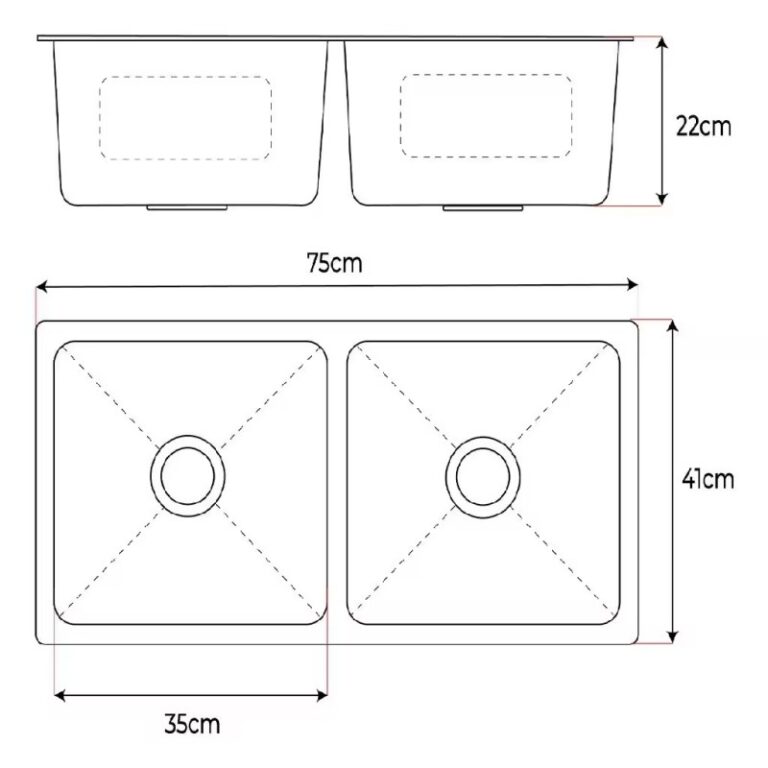
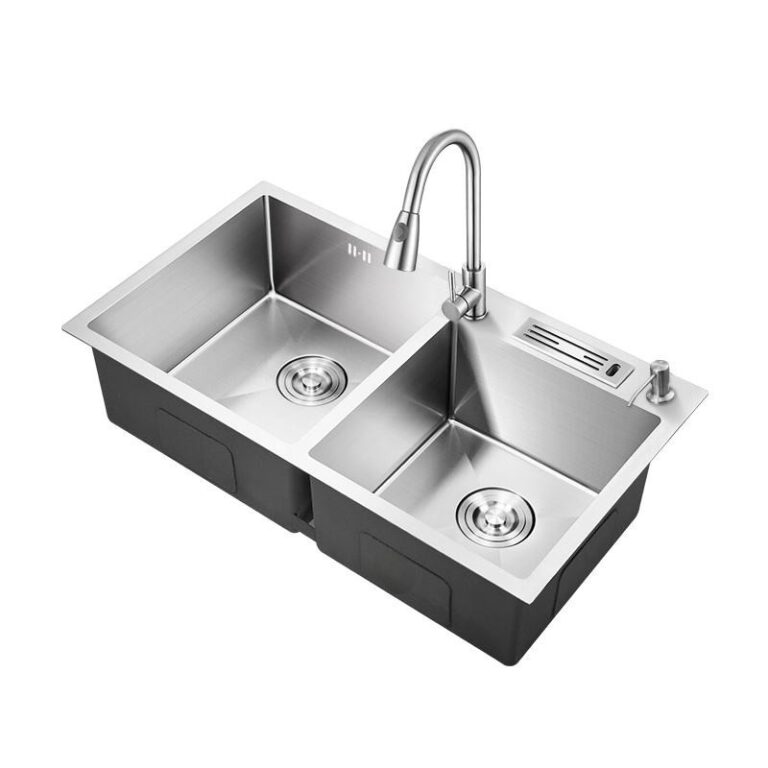
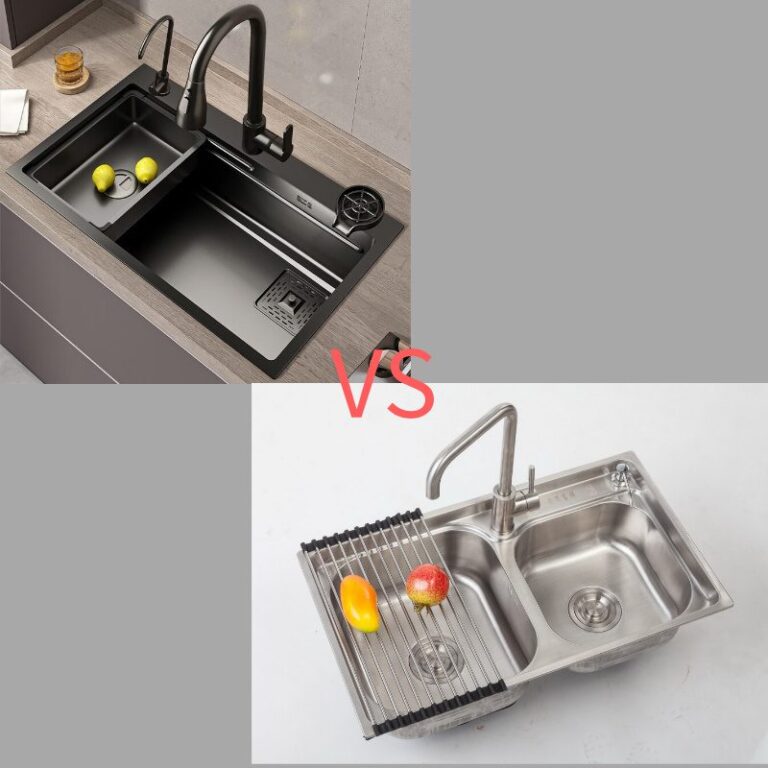
Redefine your kitchen experience
Our handmade sinks are created by experienced craftsmen, and each piece is a unique work of art.

People usually ask this question after they’ve already looked at ten sinks and still don’t feel confident. If it were as simple as “lower gauge is better,” the decision would take thirty seconds. The fact that it doesn’t is already a clue that something else is going on.
Gauge matters, yes. But it’s rarely the reason someone ends up happy — or annoyed — with their sink five years later. Many buyers only realize this after browsing real-world options like modern stainless steel kitchen sinks and comparing how they actually feel in use.
Most regret comes from expectations that were never discussed.
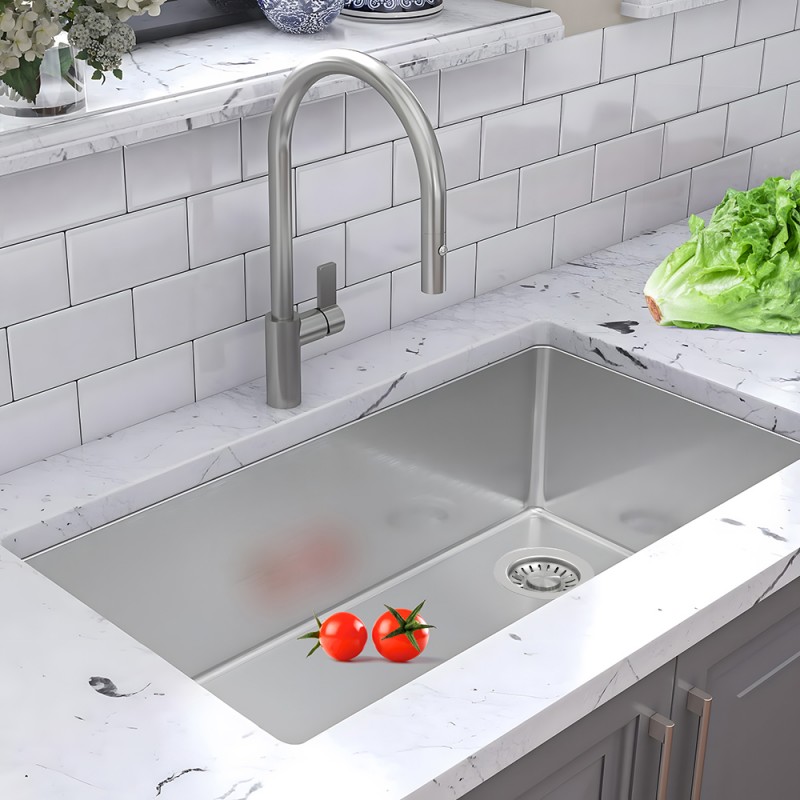
Here’s the uncomfortable truth:
most homeowners cannot tell the difference between 16 gauge and 18 gauge by looking at the sink.
They only notice it after the sink is installed and used — especially with popular configurations such as an undermount sink where rigidity becomes more noticeable over time.
That’s because gauge doesn’t announce itself visually. It shows up as:
Sixteen gauge is thicker. Eighteen gauge is thinner. That part is factual. But durability is not a single-variable equation. Thickness helps, but it doesn’t act alone — particularly in larger formats like a workstation sink designed for multi-tasking.
I’ve seen 18-gauge sinks still going strong after a decade, and 16-gauge sinks that felt cheap within months. That’s not theory — that’s manufacturing reality.
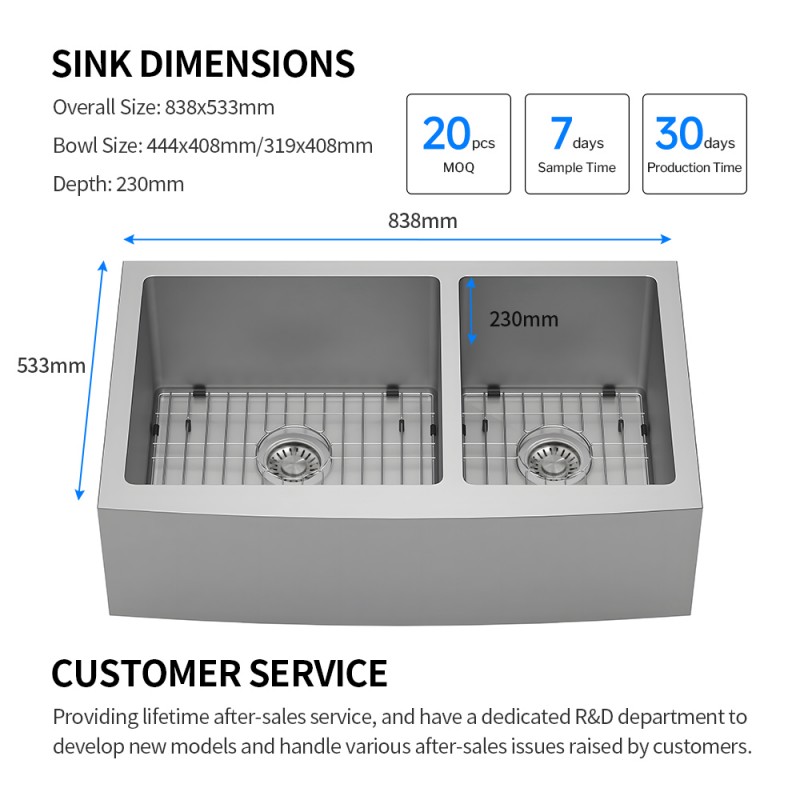
Yes, 16 gauge has more metal. Roughly a third of a millimeter more. On paper that sounds trivial. In use, it isn’t.
That extra thickness resists vibration. It resists flexing when weight is uneven. And it tolerates small impacts better — something especially noticeable in compact designs like a single-bowl kitchen sink.
But here’s what most blogs don’t say:
thickness exaggerates both quality and flaws.
If the sink is well made, thicker steel feels fantastic.
If it’s poorly formed or welded, thicker steel just makes those flaws heavier and more obvious.
If you cook a lot, especially with heavy cookware, 16 gauge makes sense. Not because it’s stronger in some abstract way, but because it feels calmer. Less ringing. Less movement. Less “metal sink” behavior.
That said, many people buy 16 gauge expecting silence, then get disappointed. Why? Because noise is mostly about sound-deadening, not gauge.
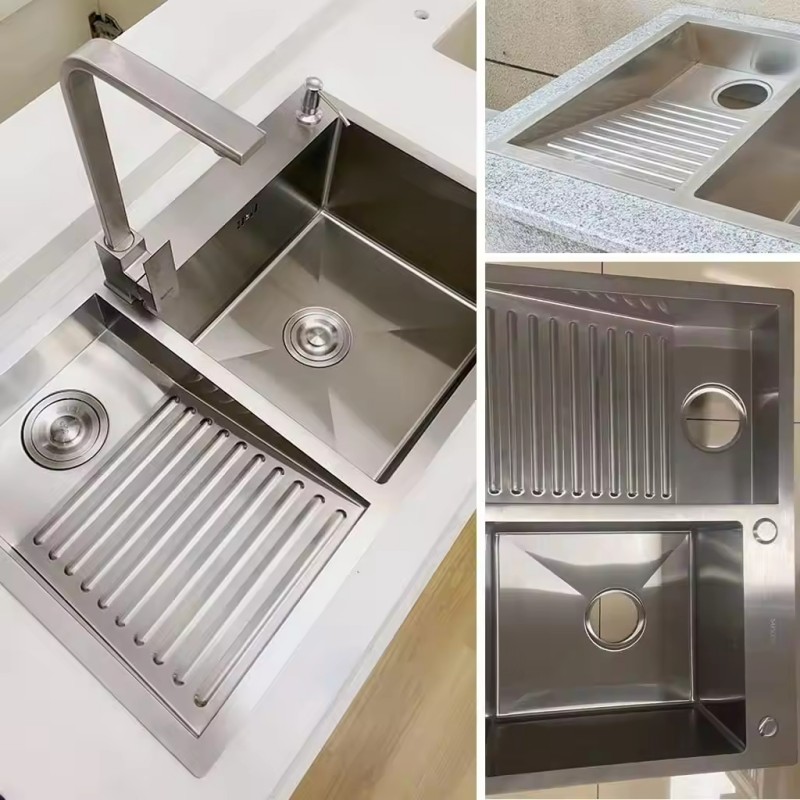
A thoughtfully built 18-gauge sink with full undercoating — such as an 18-gauge stainless steel sink with washboard — often sounds better than a bare 16-gauge bowl. This is one of those details manufacturers rarely highlight, because it complicates the story.
Real kitchens are complicated.
| Aspect | 16 Gauge Stainless Steel Sink | 18 Gauge Stainless Steel Sink |
|---|---|---|
| Steel thickness | Thicker, more rigid | Slightly thinner, more flexible |
| Overall feel | Solid, heavy, stable | Lighter, still sturdy |
| Dent resistance | Better under heavy impact | Good for normal daily use |
| Noise level | Naturally quieter, less vibration | Can be louder without sound pads |
| Flex under weight | Minimal | Slight flex possible |
| Installation confidence | Ideal for undermount installs | Works well with proper support |
| Typical price | Higher | More budget-friendly |
| Best for | Heavy home use, serious cooks | Most residential kitchens |
| Factor | 16 Gauge | 18 Gauge |
|---|---|---|
| Natural resonance | Lower | Higher |
| Dependence on sound-deadening | Helpful but not critical | Very important |
| Performance with undercoating | Excellent | Excellent |
| Performance without undercoating | Acceptable | Often disappointing |
| Scenario | Outcome |
|---|---|
| High-quality 18 gauge vs poorly made 16 gauge | 18 gauge performs better |
| Thick steel with weak welds | Thickness doesn’t help |
| Good corner forming & finishing | Improves both gauges |
| Thin steel with strong fabrication | Still reliable for home use |
| Buyer Priority | Better Choice |
|---|---|
| Maximum rigidity & longevity | 16 gauge |
| Best balance of price & performance | 18 gauge |
| Budget renovation | 18 gauge |
| Long-term “buy once” mindset | 16 gauge |
| Secondary or prep sink | 18 gauge |
Gauge has almost nothing to do with corrosion resistance. This is where buyers get quietly misled.
The stainless steel grade matters far more — especially when looking at long-term options like a durable 304 stainless steel sink.
A thinner sink made from 304 stainless steel will outperform a thicker sink made from lower-grade steel in everyday kitchens — especially where:
If you’ve ever seen rust spots appear on a “thick” stainless sink, this is why.
Thickness can’t compensate for poor chemistry.